

Avoid Mistakes at the Start of Drawing Characters
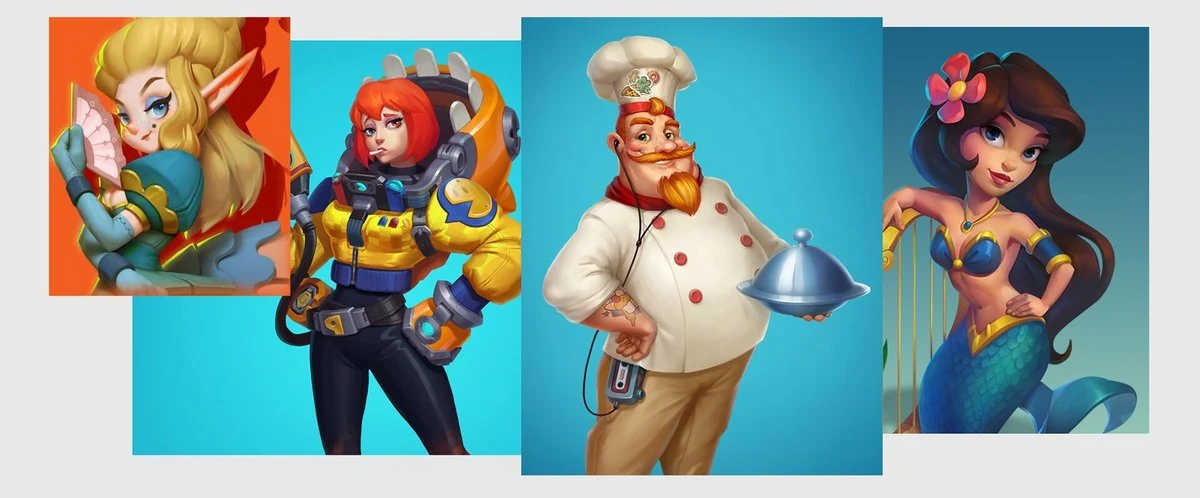
Hello, everyone! SunStrike Studio creates graphics for mobile and computer games. Below you will find detailed feedback on one of the tasks performed as part of our open test assignment. The author of the work has given us permission to publish this information.
What could be more annoying than correcting a character after it has already been carefully rendered? Psychologically, you’re ready to finish the job, you’ve worked out the details and rendered the material. Certain parts seem to be very successful to you. And then you get some feedback or you notice your own mistakes. At this stage, you will need to spend more effort and time to correct everything in the finished work.
It’s like a house which sags when the builders didn’t take care of the foundation and framing materials at the beginning.
Any character has a frame which you can apply any design and theme to. It’s not just about making a skeleton for the figure, but also about a set of other characteristics necessary for your work to be a success.
Let’s take a look at the 7 fundamental stages of creating a character.
1. Brief
The building of a house always starts with a design. Likewise, drawing a character starts with an idea or a Brief. In this case, this was our brief:
Draw a character following a description in the suggested style.
- The character is male, 30-35 years old, he is a traveler who is an athlete, the setting is modern day.
- The appearance and details of the character should show their personality and what they are involved in, the sport that he does, where he traveled, etc.
- The drawing style required needs clean colors, a moderate amount of detail and precise lines, with special attention being paid to the material. The warm lighting on the character is to the above left. There is a cold rim light at the bottom on the right. The framing should be just above the knees.
- The render and the silhouette will be the main aspects to be assessed.
- The work should be presented as the character, with a single tone background, which contrasts with the tone of the character, in JPEG format. The size of the file should be 1024 px on its smaller side.
- Several examples of sketches made that show the process of finding a solution for the task as well as a reference list and moodboard would be a plus.
Deadline: 5 days
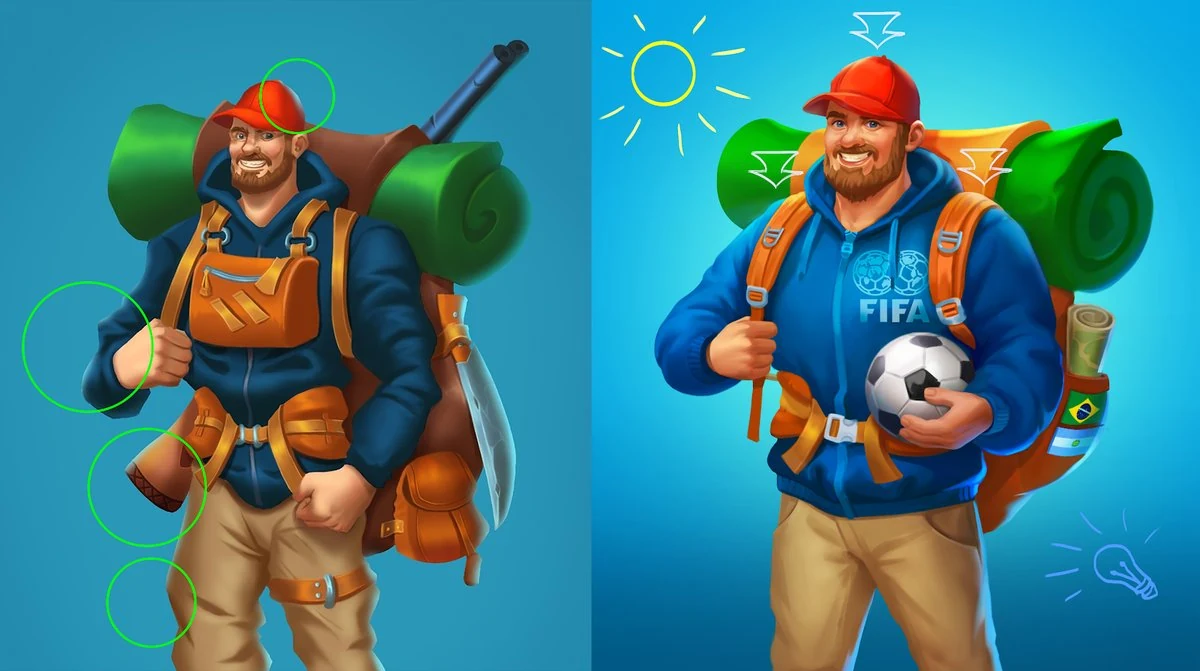
So, what was required was a travelling athlete, whose appearance would make us able to guess what his story was. When you look at the work presented here, it’s difficult to understand what sort of sport the man is involved in. His equipment suggests that he is a hunter. The bag on his neck also raises some questions. What is it for? Is there something similar in the real world? Good character design always gives the viewer a complete understanding of the character. That is the designer’s main goal.
The attached examples of stylized characters have very clear, flowing shapes and clean saturated colors, while the background has a slight gradient. Casual graphics are designed for a wide audience, including children, so the characters look cartoonish and rounded. When working on a test assignment, it’s worth capturing the general mood of the references. If the characters presented are kind, sweet and cheerful, then that’s exactly what the employer needs.
As an example, let’s make our traveler a soccer player, a fan who travels around South America. Perhaps he combined going to watch the games of his favorite team with a trip to the great outdoors.
2. Proportions and Shape
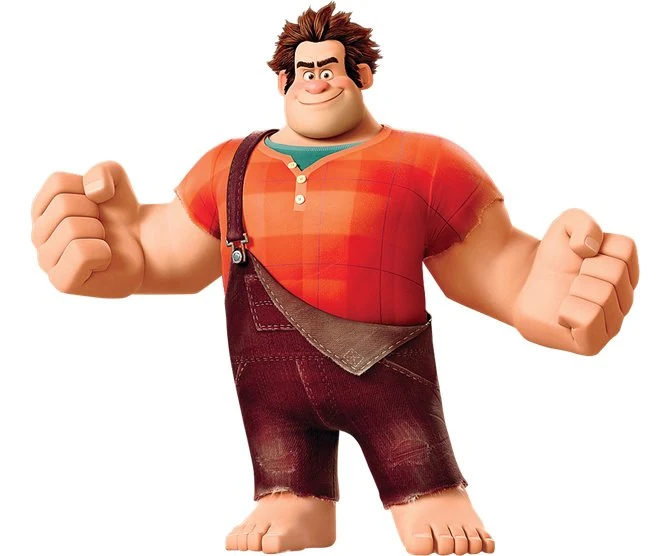
The character’s proportions ended up being closer to being realistic, although the torso looks longer than necessary and the fists are too big and almost the size of his head. This could be justified if the whole body was stylized. An example of this is Ralph:
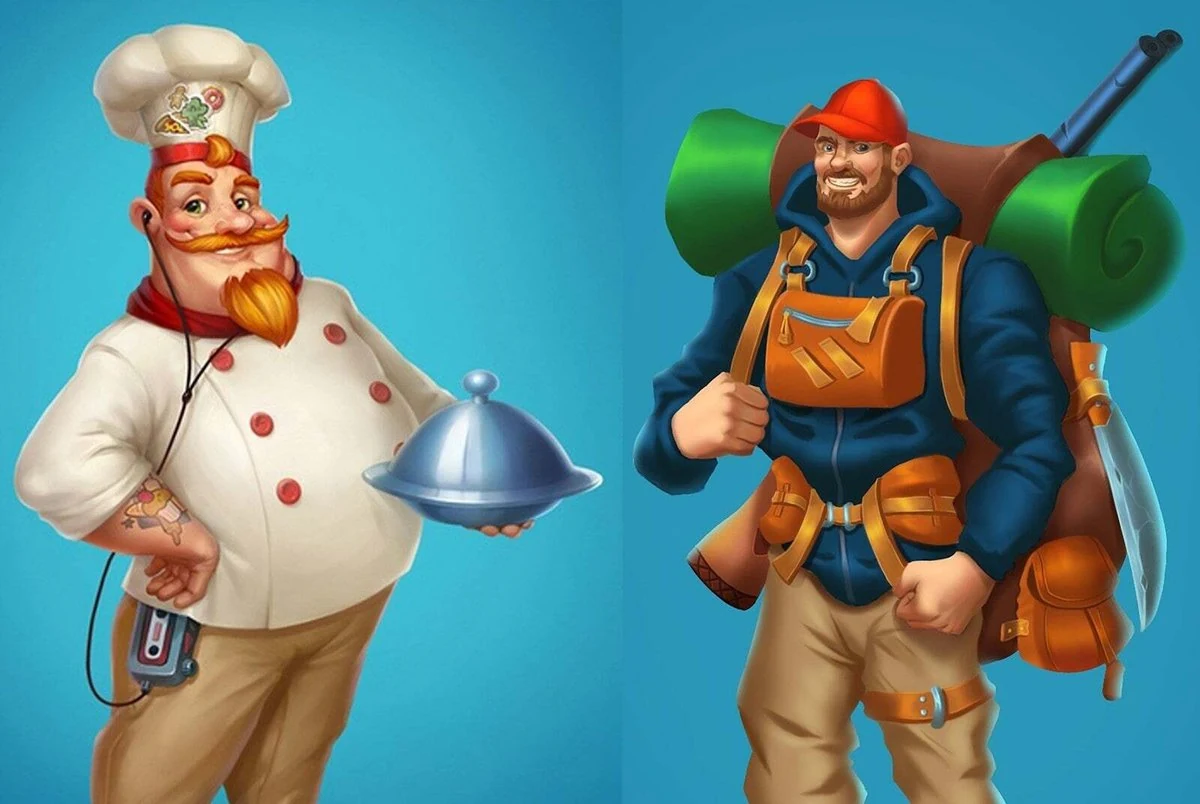
Let’s try to put the hunter and the cook from the example next to each other:
It is noticeable that the cook looks more cartoonish. He has a big head, chubby hands and soft rounded shapes. That’s why we’ll give our character a larger head, shorter torso and arms which are not as thin.
3. Total Object Volume
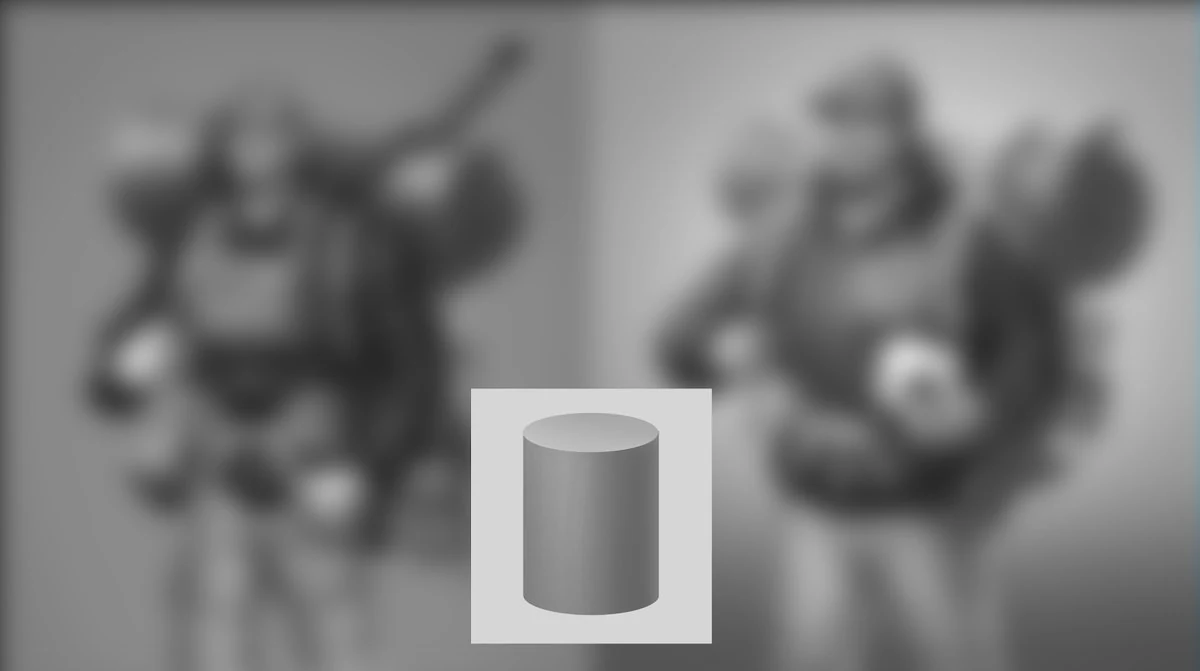
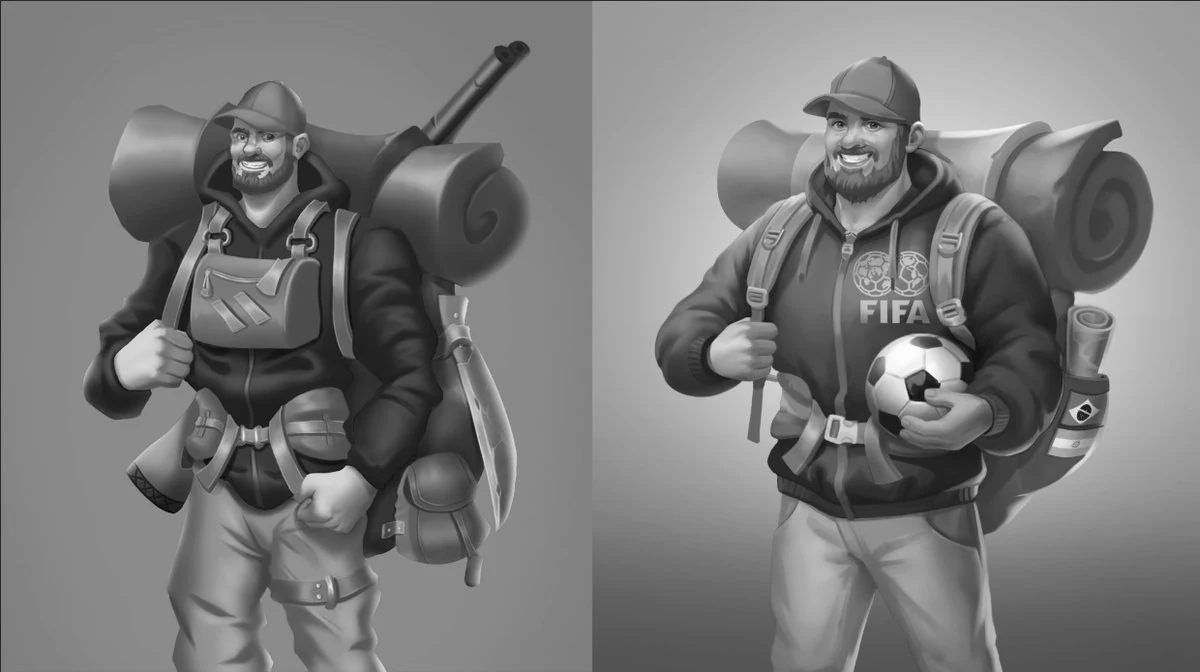
Even the most complex object has some sort of overall shape around which light is distributed. The character can be thought of as a very simplified cylinder, which will have a general light, penumbra, shadow and reflex. If we apply a Gaussian blur to the black and white version of the characters, we will see that in the example with the hunter, his figure does not give an impression of creating volume and looks like a collection of flat spots:
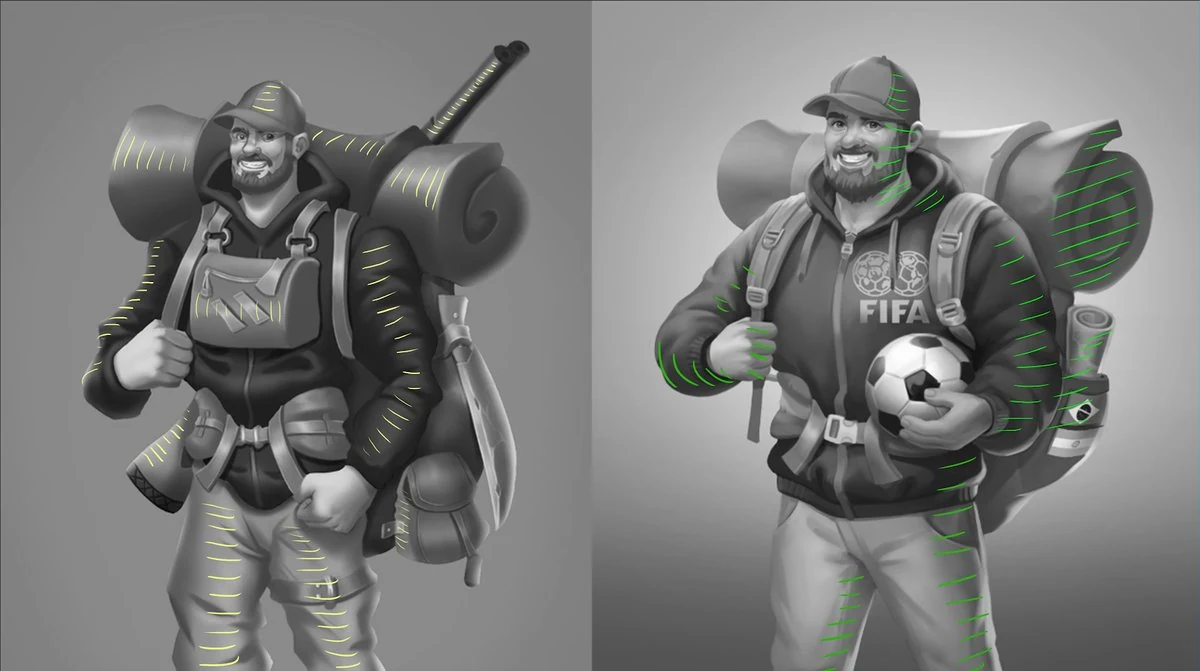
Also, if we mark the light on the hunter with brushstrokes, we can see that it falls on certain parts of the body from different directions. However, you won’t be able to feel out and mark out the character’s own shadow everywhere:
4. Tone
We can see that many elements of the black and white render are very similar in tone, which should be avoided. Otherwise, it will be very difficult for the eye to distinguish one shape from another:
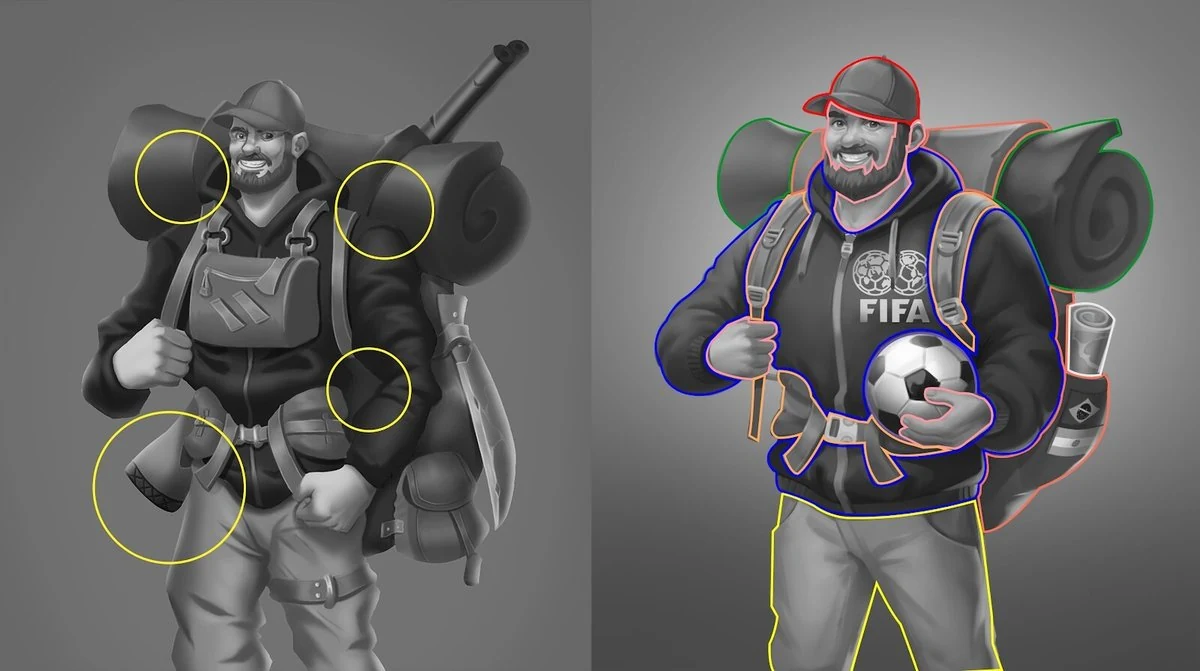
It is also worth paying attention to the fact that all colors have different tones. If we look at a rainbow, the colors will have different tones even though they have the same saturation. The darkest color will be blue, followed by red and purple.

That is why while you need to monitor color, you also need to take care of the tonal ratio, so that the work looks consistent and understandable. Colors that stand side by side visually may seem like they contrast, but their tones will fade into each other. If the colors still turn out pretty close in tone, you should try using an aerial perspective and lighting. In this case, we added a little glow from above, which allowed us to separate the character from the backpack, adding depth and space.
Also, to separate the objects from each other, you can apply a light layer of white soft brush with the “Soft light” blending mode.
Here is an example:
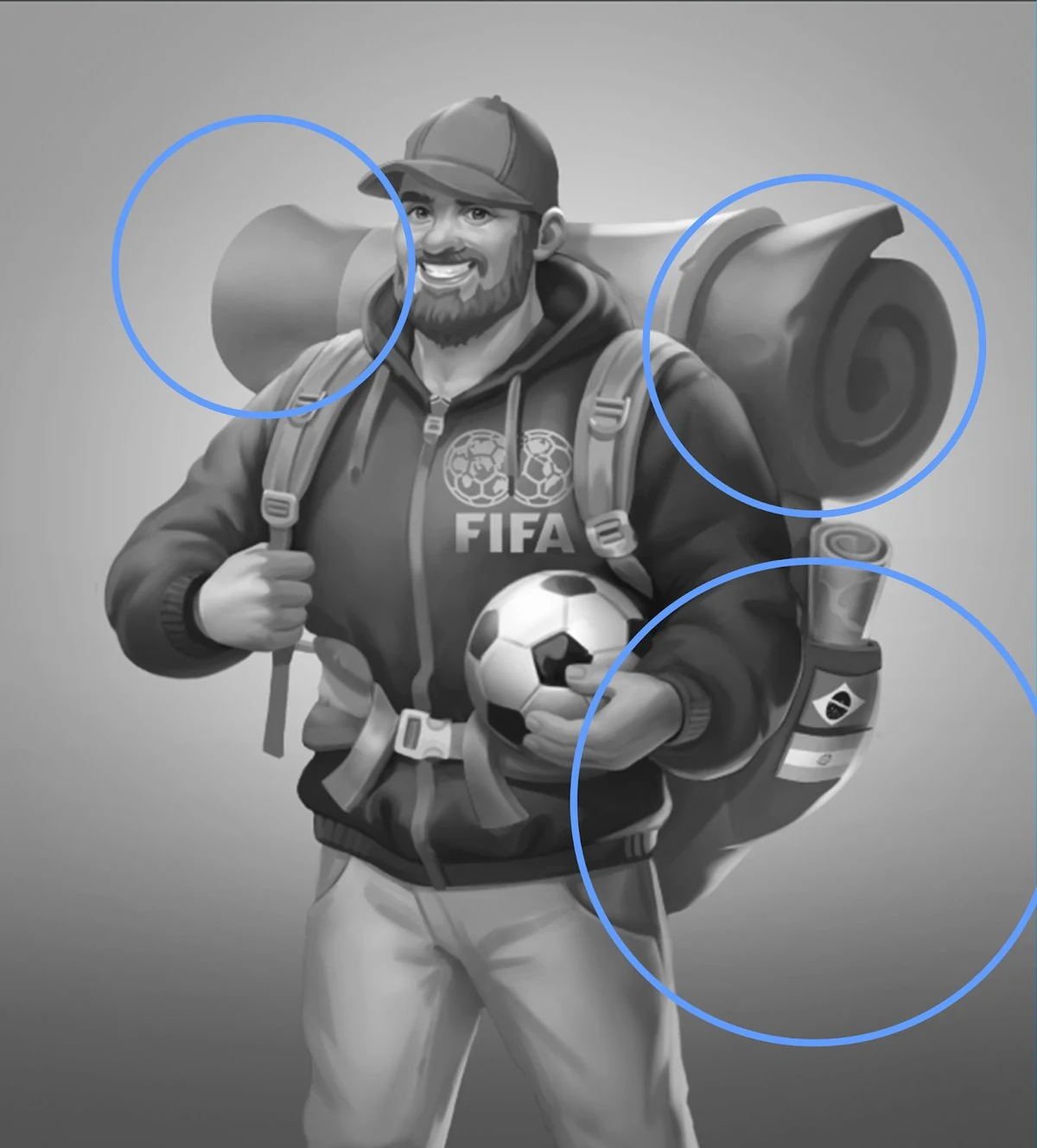
It’s as if you’re adding “air” between objects. The main thing is not to overdo it, so that the colors do not become “diluted” and unsaturated.
5. Light
It is important to keep an eye on the light sources. As specified in the brief, we will use two light sources and add reflexes from above to make the volume more defined. You should try to avoid using a rim light (contour light), which falls from different directions. It will only fall on planes that are turned toward the beam of light. You also shouldn’t “blur” the rim light with a soft monochrome brush. It breaks the impression of the shape and doesn’t look like light. It is better to use two shades in the rim lights or to use blending modes:
Examples of the shape and outline of a rim light:
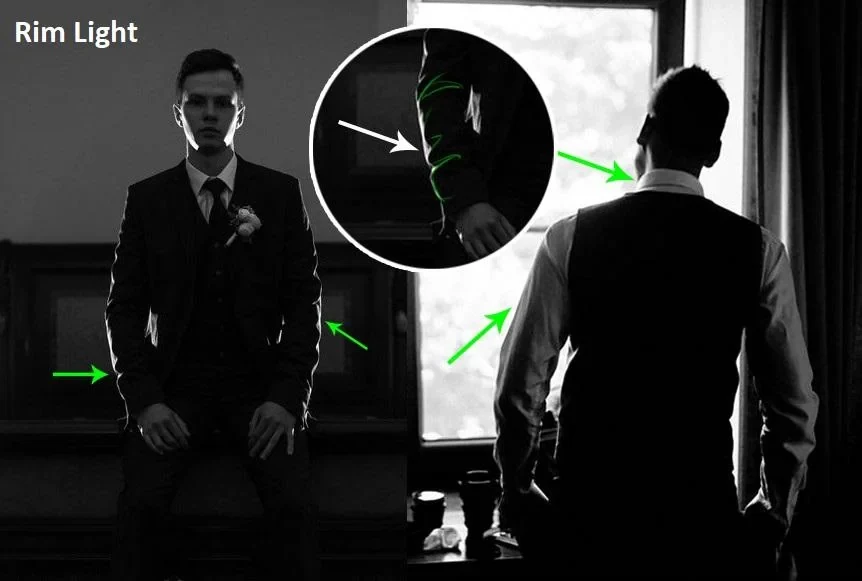
The rim light should repeat all the movements of the folds. It can have flat or blurred edges, but it should always go along the outline of the shape.
6. Color
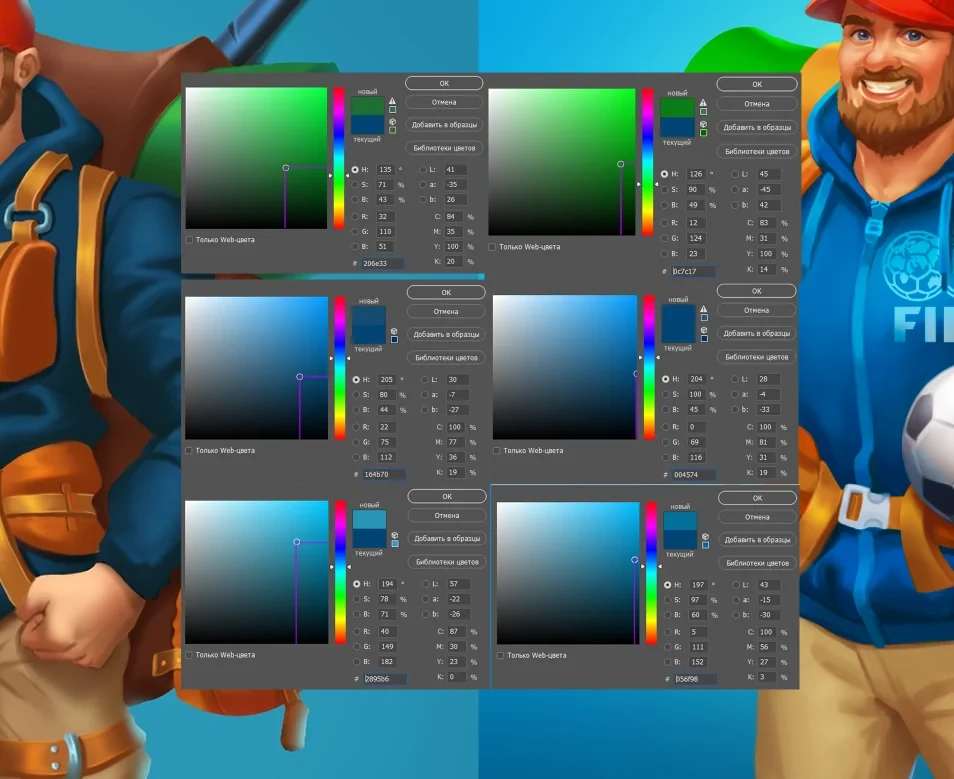
The colors traditionally used in casual graphics are clean and saturated. The time taken to complete this kind of game is usually very short. This makes attractive graphics very important. Games like these also attract a very broad range of users, so the graphics should be attractive both for children and for adults.
If you look at the HSB palette, the color values should be as close to the right edge as possible, as this will make the colors clearer:
7. The Devil is in Detail
Seemingly small details can make your character more convincing and real. Before you start, it is very important to immerse yourself in the topic and understand what particular objects look like. You shouldn’t leave items you’re not sure about. It’s worth asking the questions “How does it work?” and “Why?” more often. How do backpack straps work? How do the clasps work? How are the straps attached to the bag? What kind of bag is this? Why is the pocket “fastened” to the backpack with a stiff, angular strap that looks like an iron rivet? How is the gun hanging? How is it attached? How is the knife attached? Why is there a single strap on the foot? How the sweater fastens, etc. The more detailed you think about the mechanics of the details, the more successful your character will be:
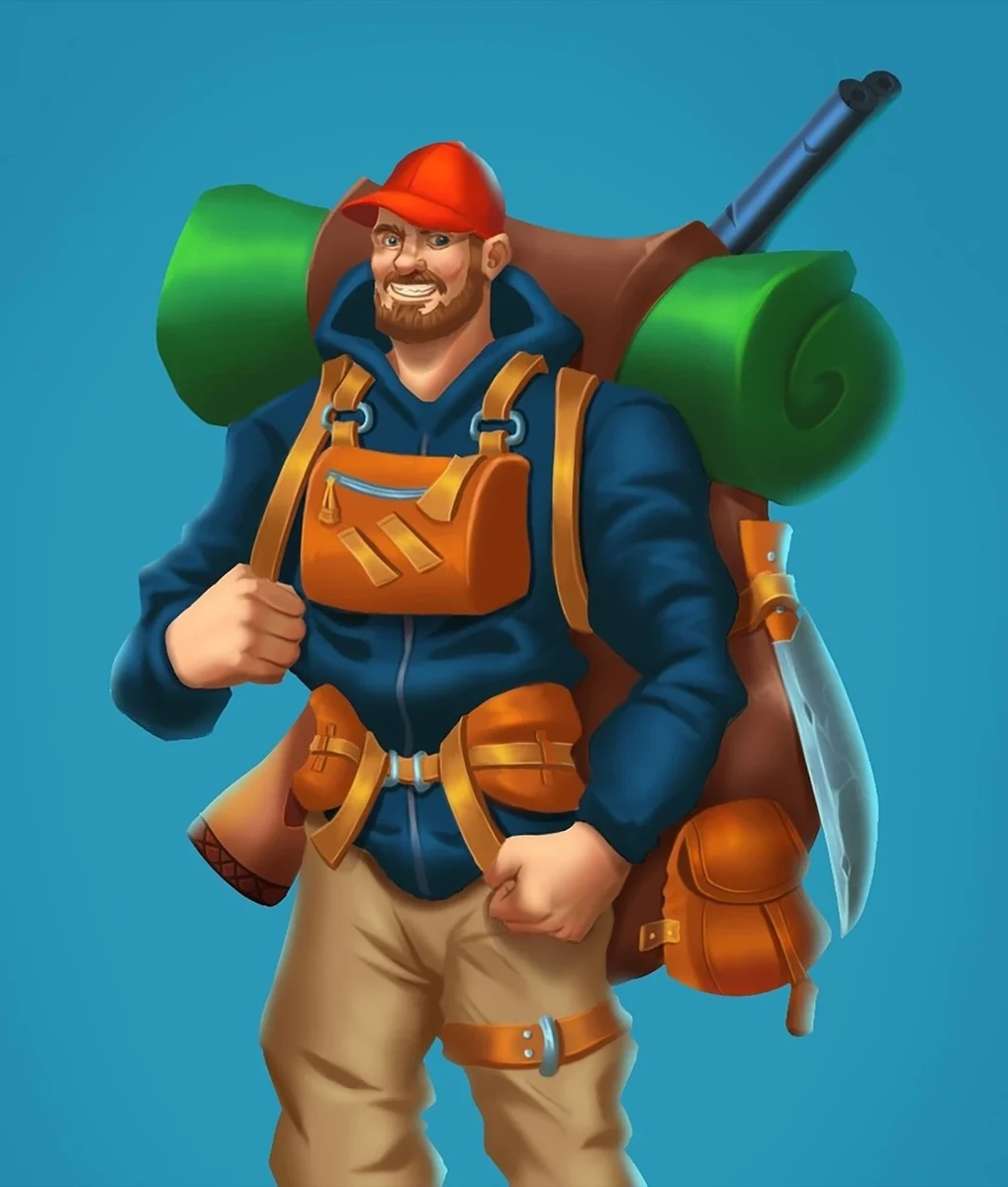
The details themselves should not raise questions, they should only help you tell the character’s story.
So here are these 7 building blocks and every one of them is very important to remember. They will help you create a character that you can then safely render and finalize.
We hope these tips will help you make your work even better. Look for more test assignment reviews from us in the near future!