
Concept Art Outsourcing: How to Choose and Brief a Studio
Most studios do not decide to outsource concept art. They discover, somewhere around the third milestone, that pre-production visuals are the bottleneck: the 3D team is idle waiting for approved sheets, marketing needs key art for a store page, and the one in-house concept artist is booked for the next two months. That is when the search for a concept art studio starts, usually under time pressure and with no process ready.
This guide covers concept art outsourcing from the buyer’s side: when it is the right call, what an external team actually delivers, how to brief and vet one, what the work costs, and which contract terms matter. If you need the discipline itself explained first - styles, categories, where concept art sits in production - start with our video game concept art breakdown and come back here for the engagement mechanics.
Key takeaways:
- Outsource concept art when demand is spiky - milestones, pitches, live-service drops - and keep art direction in-house.
- The deliverable is not a pretty picture: it is annotated sheets, orthographic views, and call-outs a modeler can build from.
- A paid test task on a real asset predicts partnership quality better than any portfolio review.
- Budget $20-60 per hour, or $350-3,300 per character concept and $1,500-15,000 per environment package.
- Settle rights assignment, portfolio rights, and the AI-usage policy in the contract before the first sketch.
When Concept Art Outsourcing Makes Sense
Outsourcing concept art works when demand for it is spiky rather than constant. Pre-production sprints, publisher pitches, new-IP exploration, and live-service content drops all create short bursts of concept work that a permanent hire cannot absorb efficiently. A full-time concept artist makes sense only when the design backlog never empties, which is true for large publishers and rarely true for anyone else.
Four situations where an external team is the cleaner answer:
- Pre-production on new IP. Outside eyes generate a wider spread of visual directions before the team commits to one.
- Milestone overflow. Your concept artist is on the hero character; forty enemies and props still need designing.
- A style outside your team’s range. Your artists are strong in sci-fi and the project needs Slavic folklore or 1950s Americana.
- Live-service cadence. Seasonal drops need fresh concepts every four to eight weeks with no headcount growth.
The inverse also matters. Keep concept art in-house when the art direction itself is still being invented and the director needs to sketch alongside the team daily. Outsourcing an undecided vision produces expensive exploration nobody can approve.
What a Concept Art Studio Actually Delivers
Concept art services are sold as artwork, but the deliverable is documentation, not illustration. A finished concept package tells a modeler, animator, and level designer exactly what to build - shapes, proportions, materials, color values, and the parts that are load-bearing for gameplay. A beautiful painting that leaves those questions open has not finished the job.
A production-grade package usually contains:
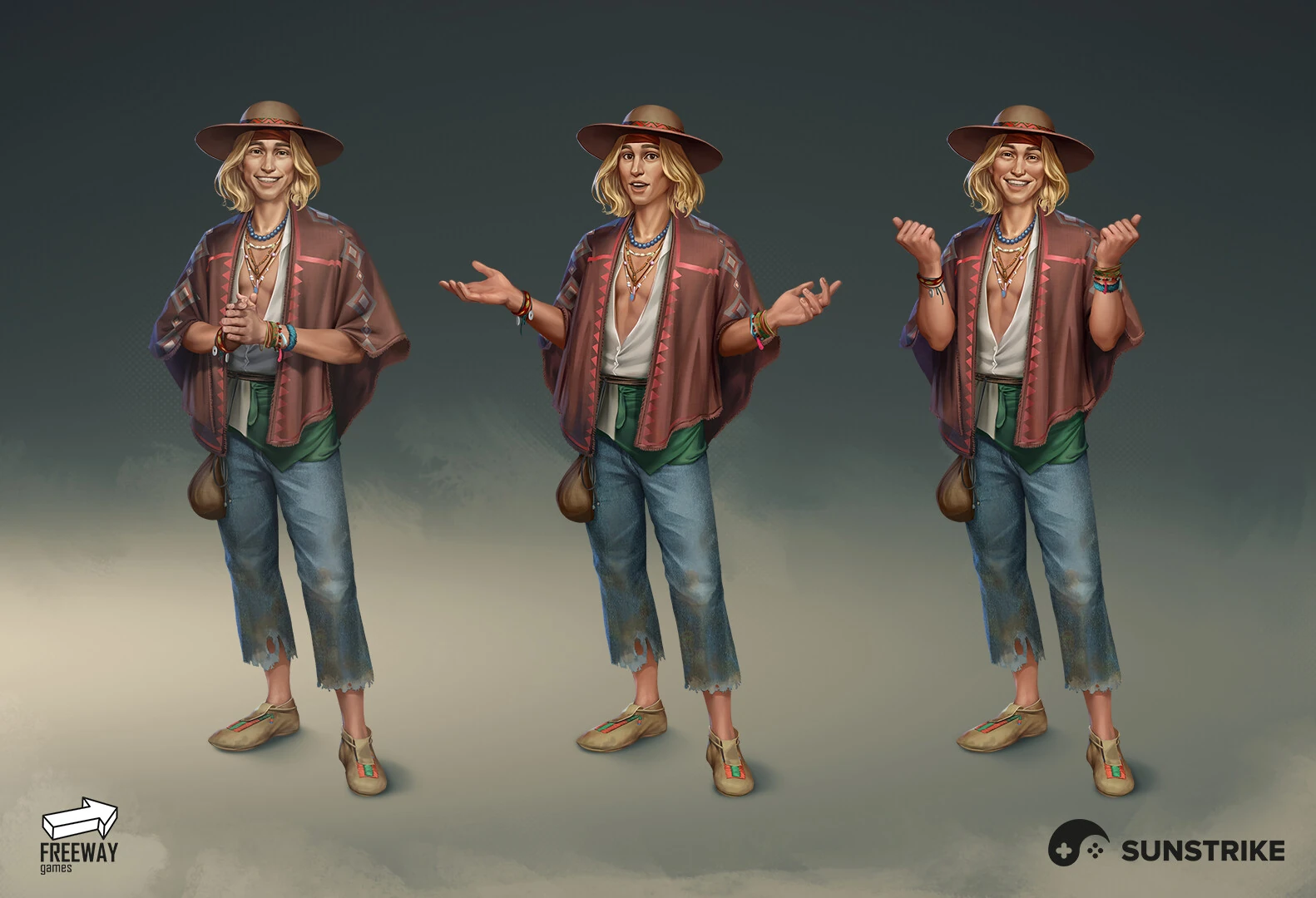
- Character sheets - front, back, and three-quarter views, plus expression and pose studies where animation needs them.
- Creature and enemy designs with silhouette variants, scale references against a player-height figure, and attack-readable shapes.
- Environment paintovers locking composition, lighting, time of day, and architectural language.
- Prop and weapon sheets with material call-outs and dimension notes.
- Key art and marketing illustration for storefronts, trailers, and ad creatives.
- A style guide or shape-language document so the next batch stays consistent without re-explaining the target.
Ask for the file structure in writing before work starts. Layered source files, named groups, and flattened previews at agreed resolutions cost nothing extra when they are specified up front, and they are painful to retrofit after twenty concepts have shipped.
How to Brief an External Concept Team
A concept art brief has to answer what the asset is for, not just what it looks like. External artists cannot infer your gameplay constraints, camera angle, or engine limits from a mood board, and every gap in the brief becomes a revision round later. Twenty minutes of writing routinely saves a week of back-and-forth.
Put these in every brief:
- Purpose and context. Where the asset appears, what the player does with it, which screen or camera it lives under.
- Style target. Reference images from your own game first, competitor references second, and an explicit note on what to avoid.
- Technical constraints. Target platform, polygon and texture budgets downstream, silhouette readability at the actual on-screen size.
- Required views and states. Front, back, three-quarter, upgrade tiers, damage states, color variants - name them, do not imply them.
- Approval path. Who reviews, how many rounds are included, what turnaround you can promise on feedback.
- Definition of done. File format, layer structure, resolution, naming convention.
Studios that reply to your first brief with a list of questions are the ones to keep. Silence and immediate agreement usually mean the artist will guess, and you will pay for the guess.
Vetting a Concept Art Studio: Portfolio, Test, References
Vetting a concept art studio or agency comes down to one question: can this team work inside someone else’s art direction? Most portfolios are built to show personal style, which is the opposite skill. Look for evidence of range - several distinct art bibles executed convincingly - and for shipped titles where the studio’s work is indistinguishable from the client’s in-house output.
Size matters less than that evidence: a concept art agency with fifty artists and a boutique team of four can both deliver, and both can miss.
Run the check in three passes:
- Portfolio pass. Find pieces in the style you actually need, not the style you admire. Ask which parts were theirs on collaborative projects.
- Paid test task. Give one real asset from your backlog with your real brief. You are measuring style match, turnaround, feedback handling, and file hygiene at once.
- Reference pass. Talk to two past clients about revision discipline, deadline behavior, and what went wrong. Every long engagement has a story; the useful signal is how it was handled.
Red flags worth walking away from: no questions about the brief, portfolios where every piece shares the same lighting and palette, reluctance to name the artists who will do the work, and a refusal to quote revision rounds.
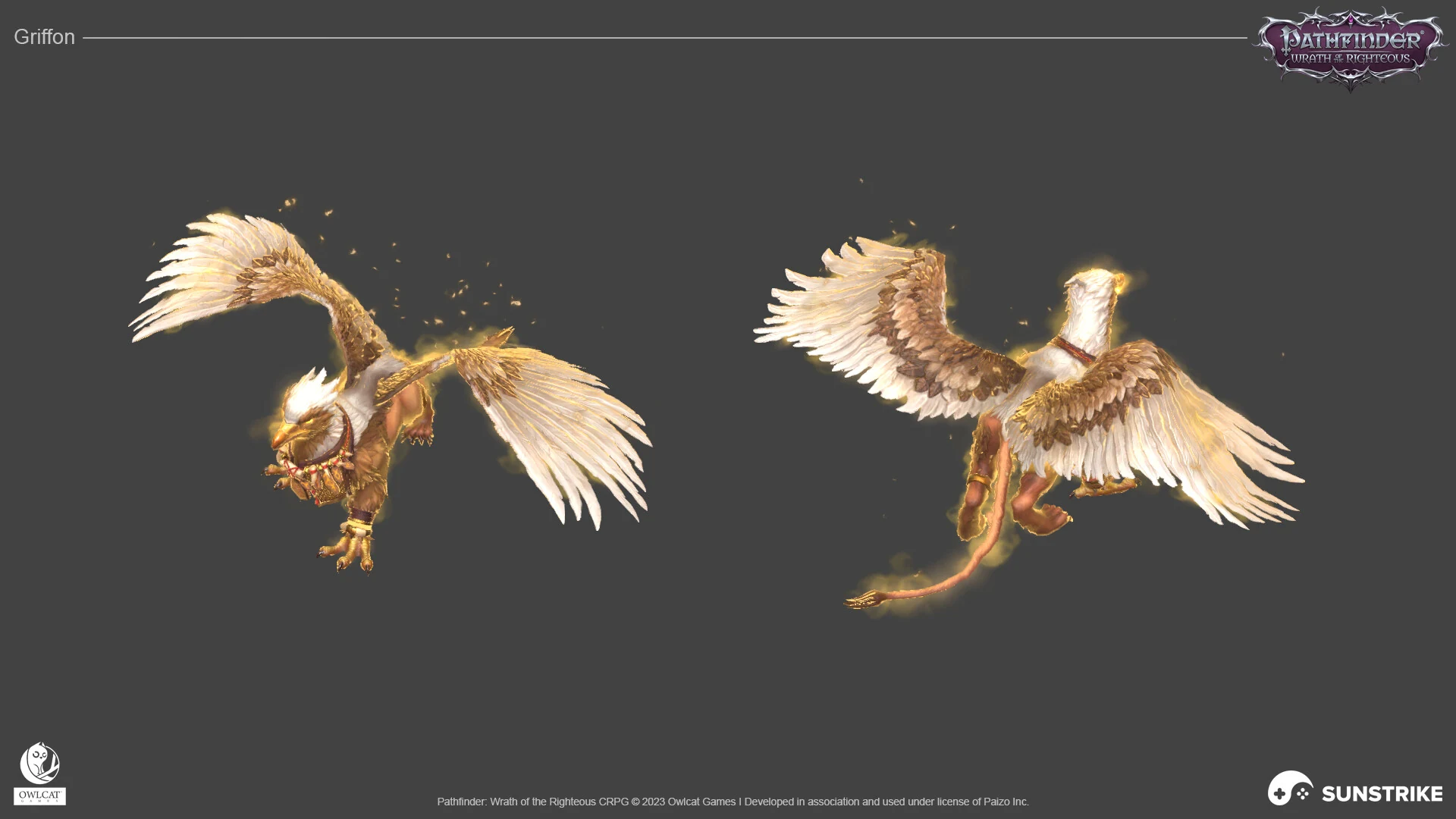
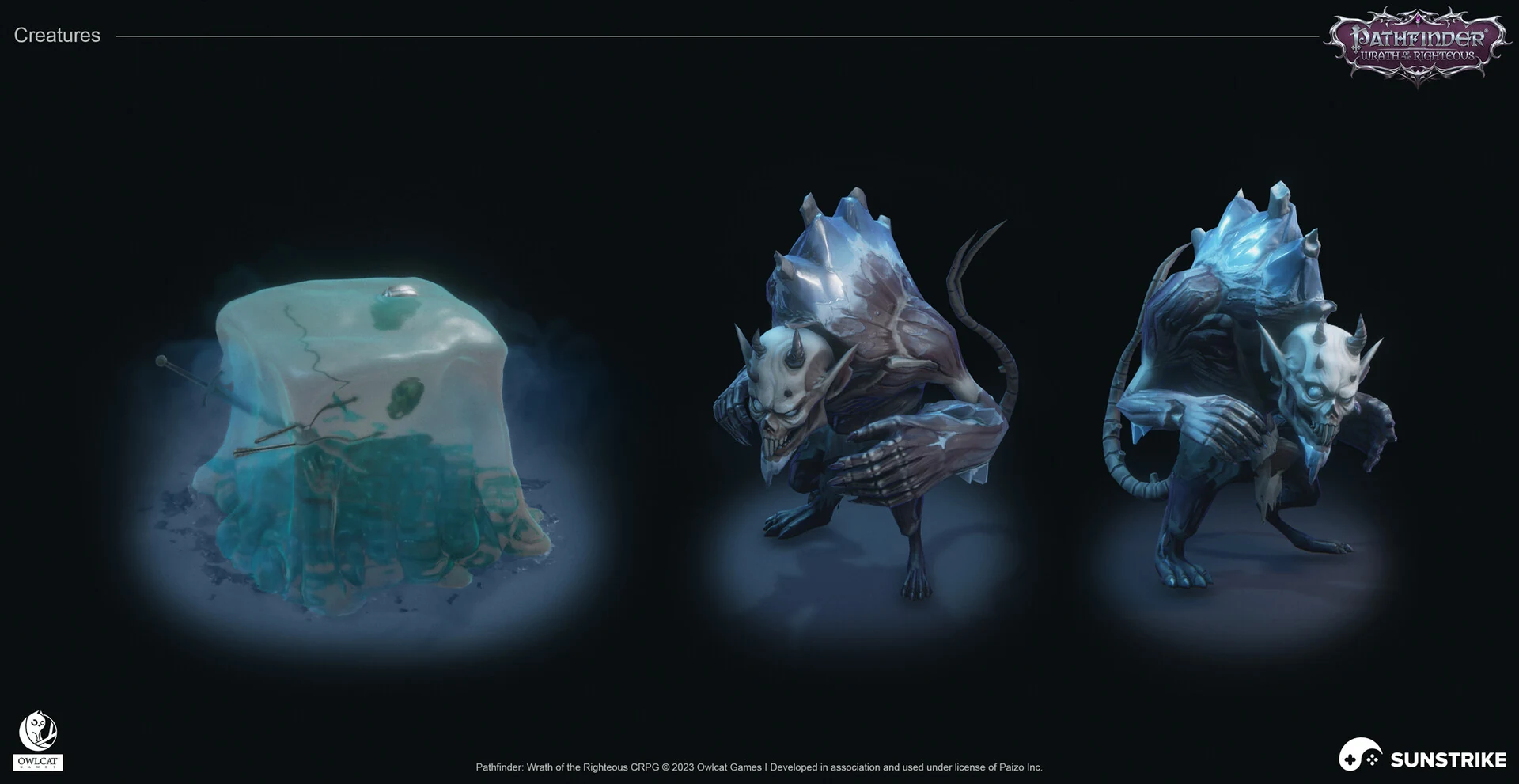
We approach it from the other side of the table on projects like Owlcat Games’ Pathfinder: Wrath of the Righteous, where our creature and character concepts had to sit inside a mature art bible built by the client’s team. Style calibration on the first two assets is the whole game - after that, batches move fast.
Engagement Models and What Concept Art Costs
Three engagement models cover almost all work with a concept art outsourcing studio, and the right one depends on how well-defined the scope is. Fixed price fits a known list of assets with a locked brief. Time and materials fits exploration where the scope will move. A dedicated team or pod fits continuous live-service output where the same artists stay on your project for months.
Rough 2026 market anchors:
- Hourly rates: $20-60 depending on seniority, region, and how specialized the style is.
- Single character concept: $350-3,300, driven mostly by revision rounds and number of required views.
- Environment package: $1,500-15,000 for a location with lighting and time-of-day variants.
- Prop or weapon sheet: $100-500 each, cheaper in batches of ten or more.
- Style guide document: usually quoted separately, and worth it before a large batch.
What actually moves the price: how many views and states you need, how many revision rounds are included, whether the studio has to reverse-engineer an existing art bible from screenshots, and how tight the deadline is. Rush work carries a premium everywhere, and the honest studios say so up front rather than quietly cutting rounds.
Review Cycles That Do Not Burn the Budget
Revision discipline decides whether an engagement lands on budget. The pattern that works is staged approval: sign off on silhouette and composition before any rendering happens, because a rejected sketch costs hours and a rejected finished painting costs days. Most overruns trace back to feedback that arrived after the expensive stage was already done.
A workable cadence looks like this:
- Thumbnails and silhouettes - three to five options, one round of feedback, pick a direction.
- Refined sketch - proportions, key details, gameplay readability. Approve or redirect here.
- Color and lighting pass - palette locked against your existing assets.
- Final render and annotation - polish plus the call-outs the 3D team needs.
- Delivery check - files, layers, naming, and a quick look in engine or against a real screen size.
Two contractual details protect both sides: a stated number of included revision rounds per stage, and a feedback turnaround commitment from you. Late client feedback is the most common cause of missed deadlines in outsourcing, and no studio can absorb it silently forever.
Handing Concept Art Off to 3D and Production
Concept art earns its budget at the handoff, when a modeler opens the file and starts building without asking questions. That requires annotation rather than illustration: material call-outs, dimension notes, orthographic views on a shared lighting setup, and a note on which details are mandatory versus decorative. Vague concepts push interpretation downstream, where fixing it costs days.
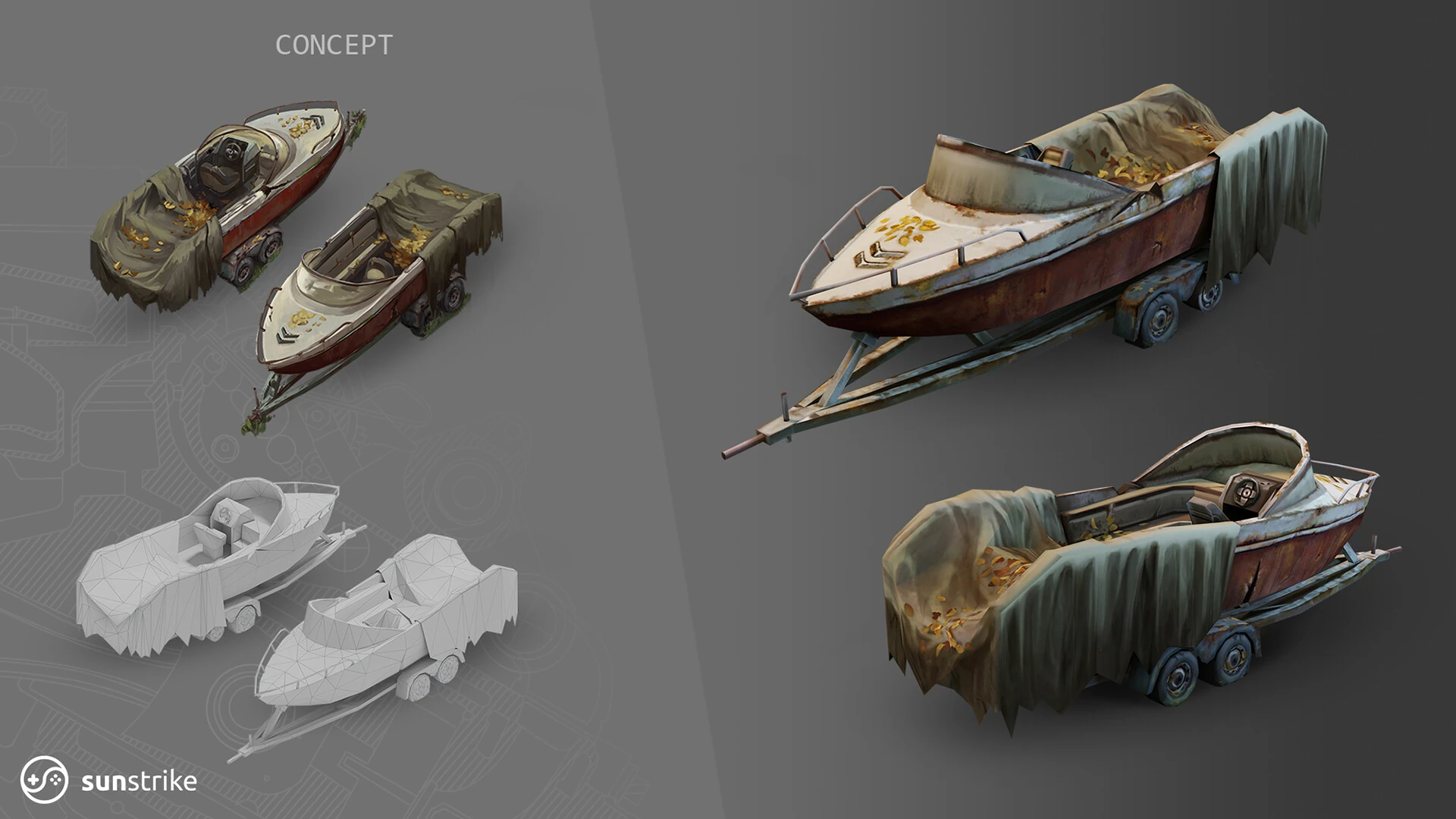
The smoothest arrangement is one partner covering concept and the production stages that follow it. When the same team takes a design through modeling and texturing, the interpretation gap disappears, and so does the meeting where two vendors disagree about what the sketch meant. Our 3D game art outsourcing and character art pipelines are built for exactly that continuity, 2D game art production picks up approved sheets on the illustration side, and the 3D game art outsourcing guide walks through the downstream stages in detail.
Contracts, NDA, and Who Owns the Art
Ownership of outsourced concept art is decided by the contract, not by default law, and the defaults vary by country. Standard game industry practice is a full assignment of rights to the client upon payment, combined with a portfolio carve-out that lets the studio show the work after release. Both clauses need to be explicit; assuming either one is how disputes start.
Settle these before the first sketch:
- Rights assignment. Written transfer on payment, worldwide, all media. In the US this often runs through a work-for-hire clause; elsewhere it is a straight assignment of economic rights.
- NDA scope and duration. A mutual non-disclosure agreement covering unannounced projects, with a defined end date or release trigger.
- Portfolio rights. What the studio may publish, when, and with what credit line. Most partners will accept an embargo; few will accept a permanent ban, and the ones who do tend to charge for it.
- AI-usage policy. Whether generative tools may be used at any stage, and what the studio must disclose. Publishers increasingly require this in writing, and it is cheaper to align on it early than to audit it later.
- Subcontracting and named artists. Whether freelancers may be used, and whether the artists shown in the pitch are the ones doing the work.
Where Outsourcing Concept Art Goes Wrong
Most failed engagements fail for process reasons, not talent reasons. The recurring pattern is a vague brief meeting an undecided art direction, with feedback arriving late and in aggregate. The studio guesses, the client rejects, and both sides conclude the other was the problem.
The five failures we see most often:
- Outsourcing an undecided vision. If nobody can say what “right” looks like, no external team can hit it. Lock the direction internally first.
- Skipping the test asset. Scaling to twenty concepts before validating one turns a style mismatch into a twenty-asset rework.
- Batched feedback. Reviewing ten concepts at once means the same correction is repeated ten times before anyone learns it.
- No named art owner. Committee approval with three opinions and no decider stalls every stage.
- Buying the cheapest hour. A cheap artist who needs four extra rounds costs more than a senior who lands it in two.
If you are still shortlisting partners, our top game art outsourcing studios comparison and the checklist for choosing a 2D art studio cover vendor selection in more depth, including the questions worth asking on a first call.
The Takeaway
Concept art outsourcing is a process problem more than a sourcing problem. Studios that write real briefs, pay for a test asset, approve in stages, and settle rights up front get consistent work from external partners for years. Studios that skip those four things churn through vendors and blame the market.
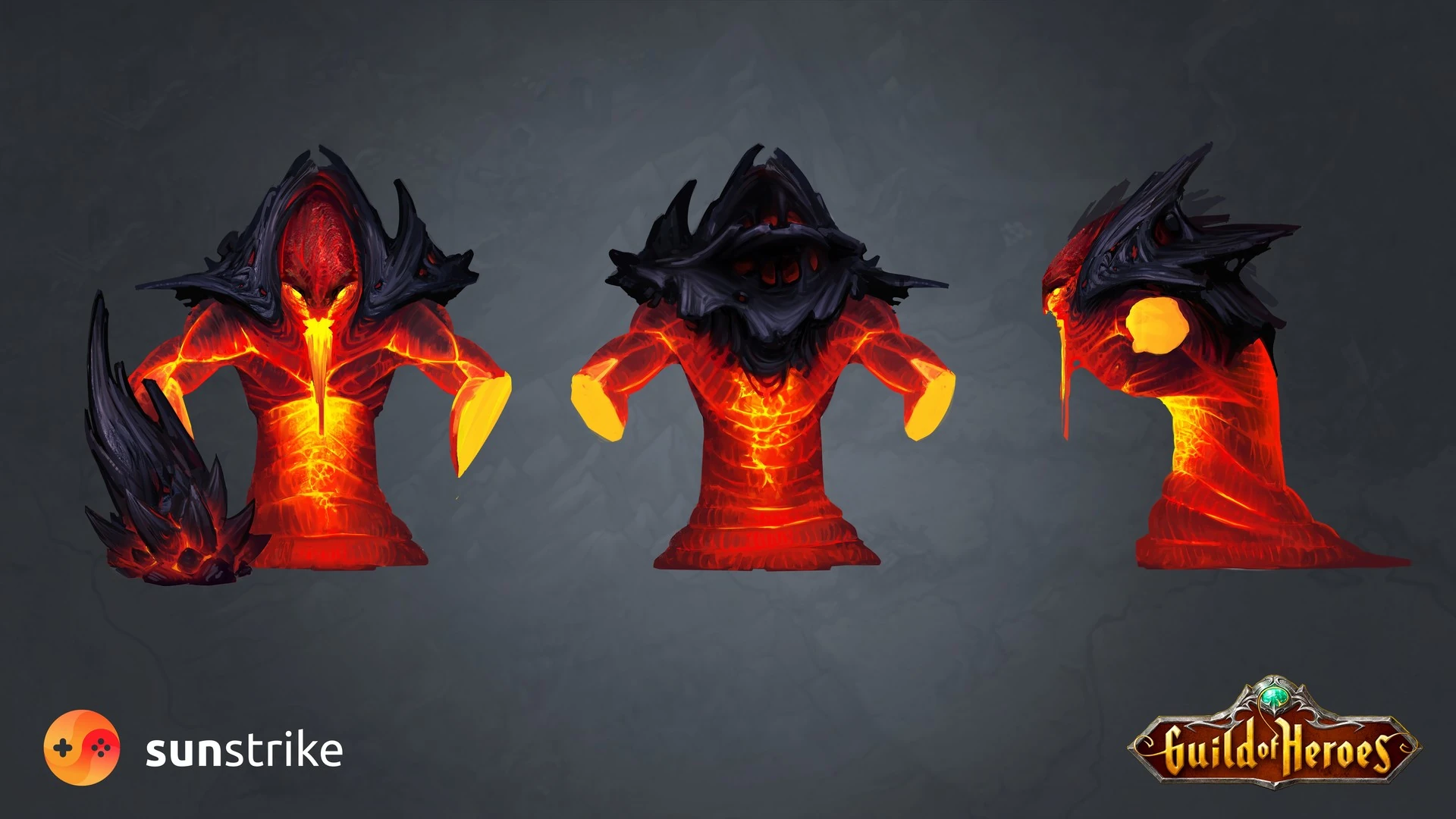
Our team has delivered concept art into other people’s art bibles across CRPG, mobile RPG, match-3, and sci-fi projects - from Owlcat Games’ Pathfinder creatures to Guild of Heroes bosses and Lost Island characters. If that is the kind of capacity your production needs, browse the concept art portfolio and tell us about the project - scope, style target, and timeline are enough to start.