

Game Animation Services: A Buyer's Guide to Pipeline and Costs
A character model can be judged from a screenshot. Animation cannot. A run cycle that looks correct in a viewport can feel weightless in the build, and a motion set that reads well on its own can fall apart the moment each clip has to blend from one state into the next. That gap between a still frame and shipped movement is where most animation projects lose time.
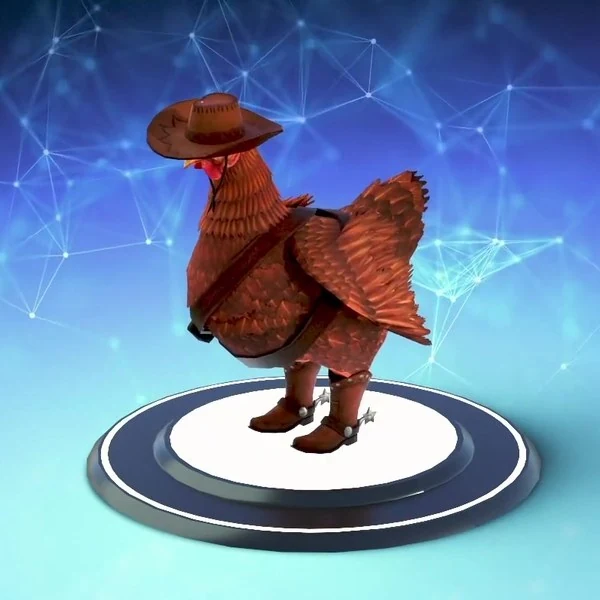
This guide covers what game animation services actually deliver: what ships in a motion set, how the pipeline runs from rig review to engine test, where 2D and 3D work diverge, and what a set costs in 2026. It draws on character and creature work our animators produced for Playducky Chicken Royale, Helio Games Mutiny, Ants Games Rumble Blast and Social Quantum Megapolis - the same production we run as a 3D animation studio for games.
Key takeaways:
- Game animation services cover four deliverable groups, not one: rig work, the motion set, transitions and blends, and the engine integration test.
- Animation is priced per clip and per set rather than per character - roughly $1,200-4,000 for a motion set of 12 to 20 clips in 2026.
- Most outsourced work happens on the client’s existing skeleton, so a rig review before scoping is what prevents paying for the same clip twice.
- 2D skeletal animation and 3D rig animation share vocabulary but differ in deliverables, file formats and the cost of a late revision.
- Environment animation is limited by runtime performance, not by any single asset: dozens of looping elements share one frame budget.
What Game Animation Services Cover
Game animation services cover four groups of work: preparing or repairing the rig, producing the motion set, building the transitions that connect those clips inside the engine, and testing the result in the actual build. Quotes differ in which of these they include, and a clip count says nothing about the rest. Rig work and engine integration are the two items clients most often leave out of scope.
That omission is a common source of budget overrun in animation projects. A quote for “20 clips” describes the animation only. It says nothing about whether the skeleton supports the planned movement, whether the exports land in the engine with the right root motion, or who fixes it when a blend between two approved clips looks broken in the build.
The four groups in practice:
- Rig work - reviewing the existing skeleton, adding controls, fixing skinning problems, or building a rig from scratch when none exists.
- The motion set - the clips themselves, grouped into idles, traversal, actions and reactions.
- Transitions and blends - authored transition clips and the blend setup in the engine that make clip A reach clip B without a visible snap.
- Integration and QA - export, naming, in-engine playback test, and the revision round that follows it.
The Game Animation Pipeline, Stage by Stage
The pipeline runs in six stages: technical brief and rig review, rigging and skinning where needed, movement language and blocking, animation with secondary motion, an engine integration test, then review and handover. The order matters because each stage locks decisions the next one depends on. Blocking approved on the wrong rig gets paid for twice.
- Technical brief and rig review. The rig file, engine version, target frame rate and naming convention arrive before anything moves. This is where a studio finds out that the “finished” skeleton has no controls for the tail it is supposed to animate.
- Rigging and skinning. Only when the review found gaps. Adding controls to an existing rig is cheaper than rebuilding, and rebuilding is sometimes the honest answer.
- Movement language and blocking. Key poses for the whole set, approved together. Locking the movement language once beats renegotiating the character’s personality on clip fourteen.
- Animation and secondary motion. Full clips, then the follow-through that sells weight - cloth, hair, ears, weapon sway. This is where timing decisions do most of the visible work.
- Engine integration test. Clips exported, imported, played in the build. Not in the animation tool.
- Review, polish and handover. Revisions against the build, then final delivery in the client’s naming convention.
Motion capture changes stage three and four rather than replacing them - captured data still needs cleanup, retargeting and hand polish, which we covered separately in the motion capture guide.
Character Animation: What a Motion Set Contains
A character motion set is normally built from four families of movement: idle, traversal, action and reaction. Idles, walks and runs usually loop; starts, stops, jumps, actions and reactions are mostly one-shots. The count is a genre question rather than a quality one - a casual character may need eight clips, an action hero thirty or more.
Our Helio Games Mutiny reel is built on exactly that structure: idle, traversal, action and reaction beats for one character, built to read as a single coherent set rather than a list of separate requests. Building it that way is what keeps a character recognisable across clips - the same weight, the same rhythm, the same personality in a walk and in a hit reaction.
A typical breakdown for a mobile action character:
- Idles - base idle plus one or two variations so the character does not read as frozen between inputs.
- Traversal - walk, run, turn, jump start, jump loop, land.
- Actions - attacks, ability casts, interactions, tool use.
- Reactions - hit reactions by direction, stagger, death.
2D vs 3D Animation for Games: Different Jobs
In 3D character animation, a rig drives a skinned mesh and the engine blends the exported clips at runtime. 2D splits into two different crafts: frame-by-frame drawing, and skeletal animation in a tool such as Spine, where sprite parts are bound to bones. The vocabulary overlaps. The deliverables and revision economics do not.
The practical difference is what a late change costs. Adjusting the arc of a 3D arm swing means editing curves on a rig. Adjusting the same arc in frame-by-frame 2D can mean redrawing every frame it touches. Skeletal 2D sits between the two, which is why it is so common in casual mobile work where sets get revised often, and why it pairs naturally with 2D character design when the sprites are built for movement from the start.
Ownership of the artwork matters here too. For Ants Games Rumble Blast we animated only - the 2D art came from the client’s own artists, and our work was to bring it to life on rigs built for their sprites. That split is common and worth naming in a brief, because a studio quoting “2D character animation” may or may not assume it is drawing the character first.

Rigs: Whose Rig, and Who Fixes It
Most outsourced game animation happens on the rig the client already ships, because that rig is what the engine, the naming conventions and the existing clips expect. Changing the skeleton mid-project can mean retargeting or reworking clips that are already approved. The rig question therefore gets settled before scoping, not after the first delivery.
Non-humanoid characters are where rig assumptions break. A humanoid skeleton maps onto standard retargeting tools and a shared library of reference motion. A creature with non-human proportions and a permanent crouch can still be retargeted, but only after custom setup, and the result needs far more hand polish. Our Mutiny work is a good example: human timing does not transfer directly to that anatomy, so the movement language had to be worked out for the creature and then held consistent across the whole set.
If the character does not exist yet, rig planning belongs in the modelling stage rather than after it - a point worth raising with whoever handles the 3D character work, because topology decisions made for a static render can quietly make a deformation problem inevitable.

Environment and In-Game Animation
Environment animation is limited by runtime performance rather than by any single asset. A character owns the screen when it acts; a city block runs dozens of looping elements at once, all sharing one frame budget on the player’s device. Each loop therefore has to read clearly while staying cheap, which is a different constraint from character work and a different skill.
Our Social Quantum Megapolis work ran on that logic across a live content cycle: animated buildings, seasonal districts and small scenes that loop inside the game rather than play as cutscene video. Content like that ships on a calendar - seasonal drops, event decorations, building upgrades - so the animation team is planning recurring batches, not a single delivery.

What to Put in an Animation Brief
A useful animation brief answers four questions before any clip is quoted: what moves, on which rig, in which engine, and at what frame rate. The rest refines the quote. Without those four, a quote is a guess, and the difference between the guess and reality shows up as a change request.
What to send:
- The rig file, plus the engine and version it targets.
- Target frame rate and any per-clip length constraints.
- The naming convention the engine expects, so exports do not need renaming later.
- Reference clips - from your own game, a competitor, or film. Two seconds of video beats a paragraph of adjectives.
- The list of states, grouped by idle, traversal, action, reaction.
- Whether transitions and blend setup are in scope, or handled by your engineers.
The same discipline applies to any outsourced art, and the broader version of it lives in our game art outsourcing guide.
Engine Handover: Where Projects Stall
Handover fails on technical details rather than artistic ones. Export format, root motion, skeleton naming, scale and retargeting settings are what decide whether an approved clip plays correctly in the build. A set that looks finished in the animation tool and broken in the engine is usually a handover problem.
Both major engines document their side of this clearly - Unity in its animation system overview and Unreal in its skeletal mesh animation documentation. The recurring failures are mundane: clips exported with root motion when the project’s movement system expects them in place, scale mismatches between tool and project, and clip names that do not match what the animation controller is looking for.
The practical safeguard is to require an in-engine test as a delivery condition, not a courtesy. Every motion set we deliver is exported to the client’s naming conventions and tested in a sample scene in the target engine before handover, because a clip that has never been played in the engine is not finished work.
What Game Animation Costs and How Long It Takes
As indicative 2026 ranges for short gameplay clips with one revision round: a single clip runs $100 to $500 depending on complexity, a humanoid rig $200 to $900, and a full motion set of 12 to 20 clips for one character roughly $1,200 to $4,000. Non-humanoid rigs cost more and are quoted after a rig review. These ranges cover the clips themselves, transition clips included; blend setup in the engine and integration testing are usually quoted as separate lines. Sets built mostly from complex action clips, or longer than 20 clips, go above that range. Cutscenes and mocap cleanup are quoted separately, by shot length and the amount of cleanup and polish.
Timelines follow a similar shape. A single test clip takes three to five working days including one revision round. A full motion set of 12 to 20 clips takes two to four weeks once the rig is approved. Beyond the complexity of the animation itself, what usually stretches a schedule is rig fixes discovered late, engine integration surprises, and changes to the movement language after blocking was signed off.
Two variables move a quote more than any other: whether the rig is ready, and whether transitions are in scope. A set quoted on a clean, approved rig with blends handled by the client’s engineers is a fundamentally cheaper project than the same clip count on an untested skeleton with blending included.
Game Animation Outsourcing: Testing a Studio Before the Full Set
The reliable test is one paid clip on your own rig, in your own engine, before the full set is scoped. It costs a few hundred dollars and answers what a showreel cannot: whether the studio can work inside your constraints, hit your movement language, and hand over something that plays in your build without engineering help.
Judge that clip on three things. Does the movement match the character’s intended personality, not just move plausibly? Did the export land in the engine without renaming or retargeting work on your side? And did the revision round actually address the note, or produce a different clip? A studio that clears all three on a paid test has shown it can work inside your pipeline; capacity and schedule for a set of thirty are still worth confirming separately.
Ask for reels rather than stills when comparing game animation services, too. Animation judged from screenshots is the mistake the whole discipline suffers from - our own animation reels exist for exactly that reason, and the same applies to anyone else you are considering.
The Takeaway
Game animation is harder to scope than most art disciplines because the deliverable is not the clip - it is the clip working inside a build the animator does not own. Three questions are worth putting to any animation project before it starts. Is the rig approved, or only assumed to be fine? Are transitions someone’s job, or nobody’s? And will delivery be judged in the engine or in a viewport?
Our animators have answered those questions across stylized characters for Playducky Chicken Royale, non-humanoid creature work for Helio Games Mutiny, 2D sets on client art for Ants Games Rumble Blast, and live environment animation for Social Quantum Megapolis. If your next character needs the same treatment, the portfolio shows the reels in context, and the 3D animation services page explains how we scope, test and price a set.