

Slot Machine Art: What a Slot Game Art Package Includes
A slot player decides in under a second: did I win, and how much? Everything on the screen exists to answer that question fast. Slot machine art is not decoration wrapped around a math model - it is the interface that model speaks through, and a symbol that reads one tier lower than it pays will quietly cost an operator retention.
This guide breaks down what a slot game art package actually contains, how symbol tiers get decided, why the background and the reel frame are two different jobs, and what casino game art costs to produce in 2026. It draws on the slot sets our artists have painted across Atlantis, heist, Wild West, Arabian and fairy-tale themes - the same production we run as a slot and casino game art studio.
Key takeaways:
- A slot art package is eight deliverable groups, not one picture: base symbols, specials, reel frame, background, logo, UI bar, feature screens, animation.
- Symbol tiers come from the math model - payout rank must be readable at a glance, before anyone opens the paytable.
- Background and reel frame ship as separate layers so each can be reskinned or refitted to a new screen ratio on its own.
- Every asset ships twice, portrait and landscape, plus atlas-ready exports for Spine or spritesheet animation.
- Rough 2026 anchors: $150-600 per themed symbol, $6,000-20,000 for a full package, 6 to 10 weeks end to end.
What Slot Machine Art Actually Covers
Slot machine art covers every visual asset inside a slot game: the base symbol set, the special symbols, the reel frame, the background scene, the game logo, the UI bar, and the feature screens for free spins and big wins. A five-reel title normally means 40 to 60 individual deliverables before a single animation is counted.
The eight groups that make up a standard package:
- Base symbols - 9 to 12 icons split into low and high tiers.
- Special symbols - wild, scatter, and often bonus or jackpot, each with stacked or expanded variants.
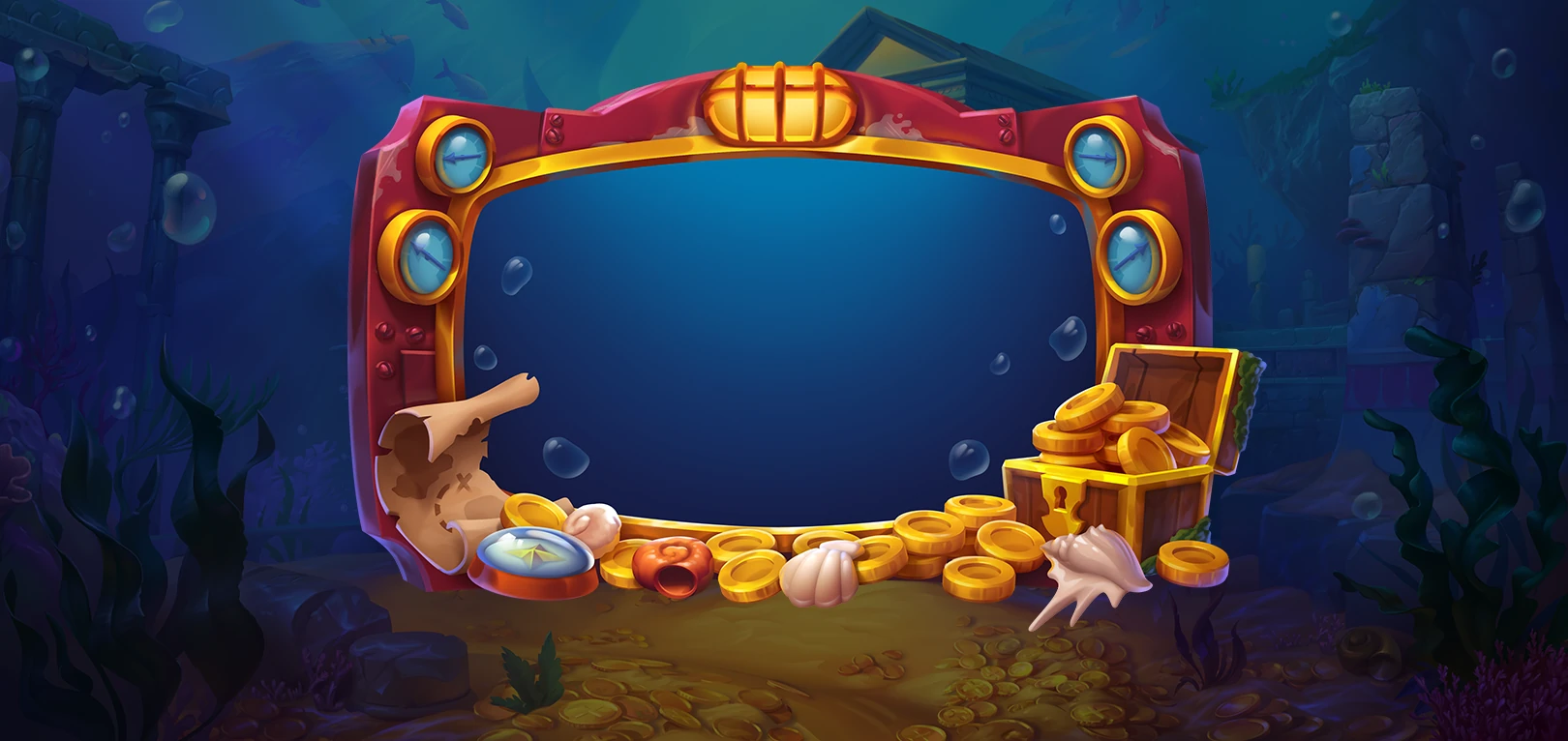
- Reel frame - the themed housing around the grid, plus its portrait and landscape versions.
- Background - the scene behind and around the reels.
- Game logo - the SKU identity, used in lobby thumbnails as well as in-game.
- UI bar - spin, autoplay, bet controls, balance and win readouts, paytable and settings.
- Feature screens - free-spins intro, bonus-round frame, big-win and jackpot splashes.
- Animation - symbol win cycles, anticipation effects, reveal sequences.
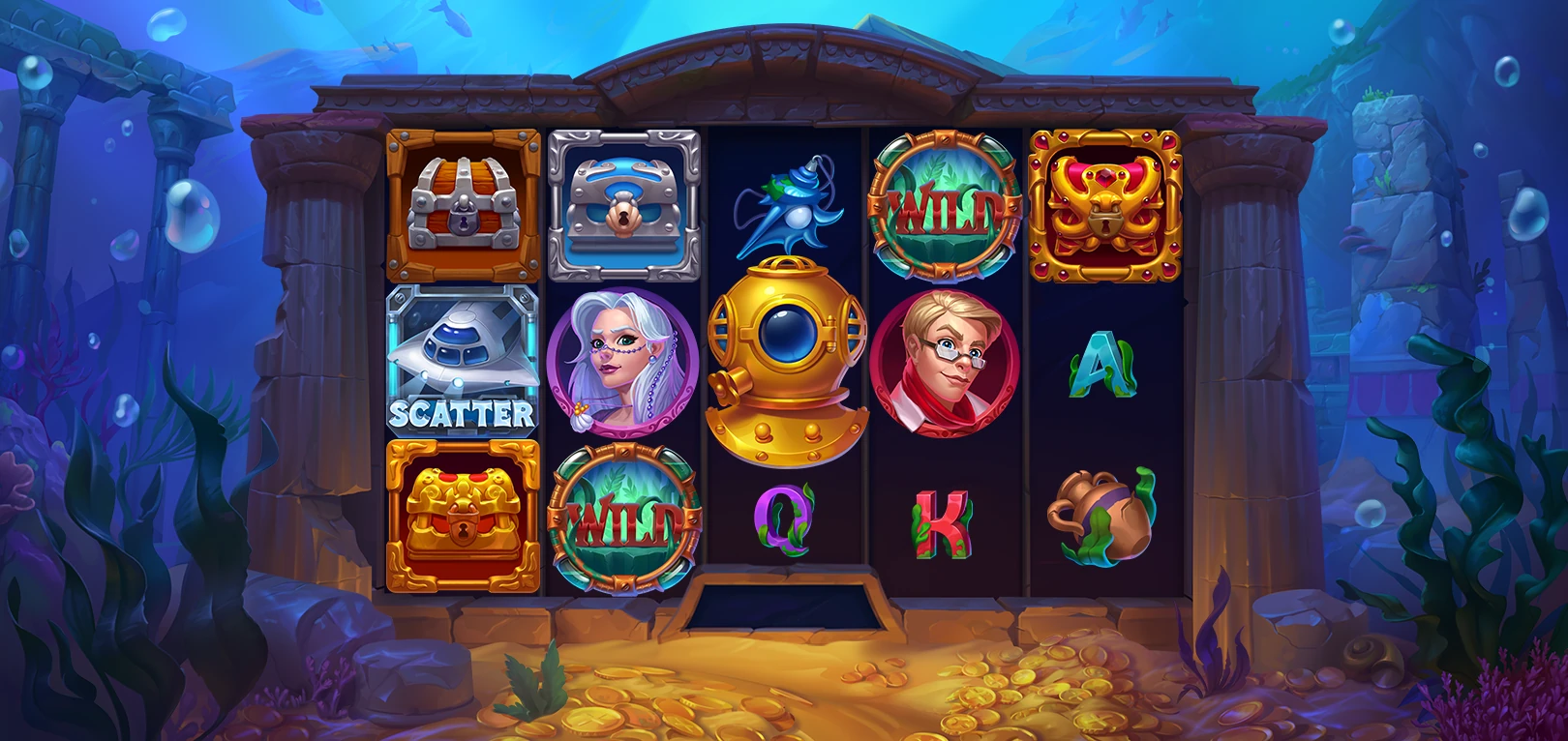
A slot machine is a much narrower canvas than it looks. Grid position, cell size and reel count are fixed before art starts, and nothing an artist does can move them.
Symbols: The Tier System Behind Every Slot
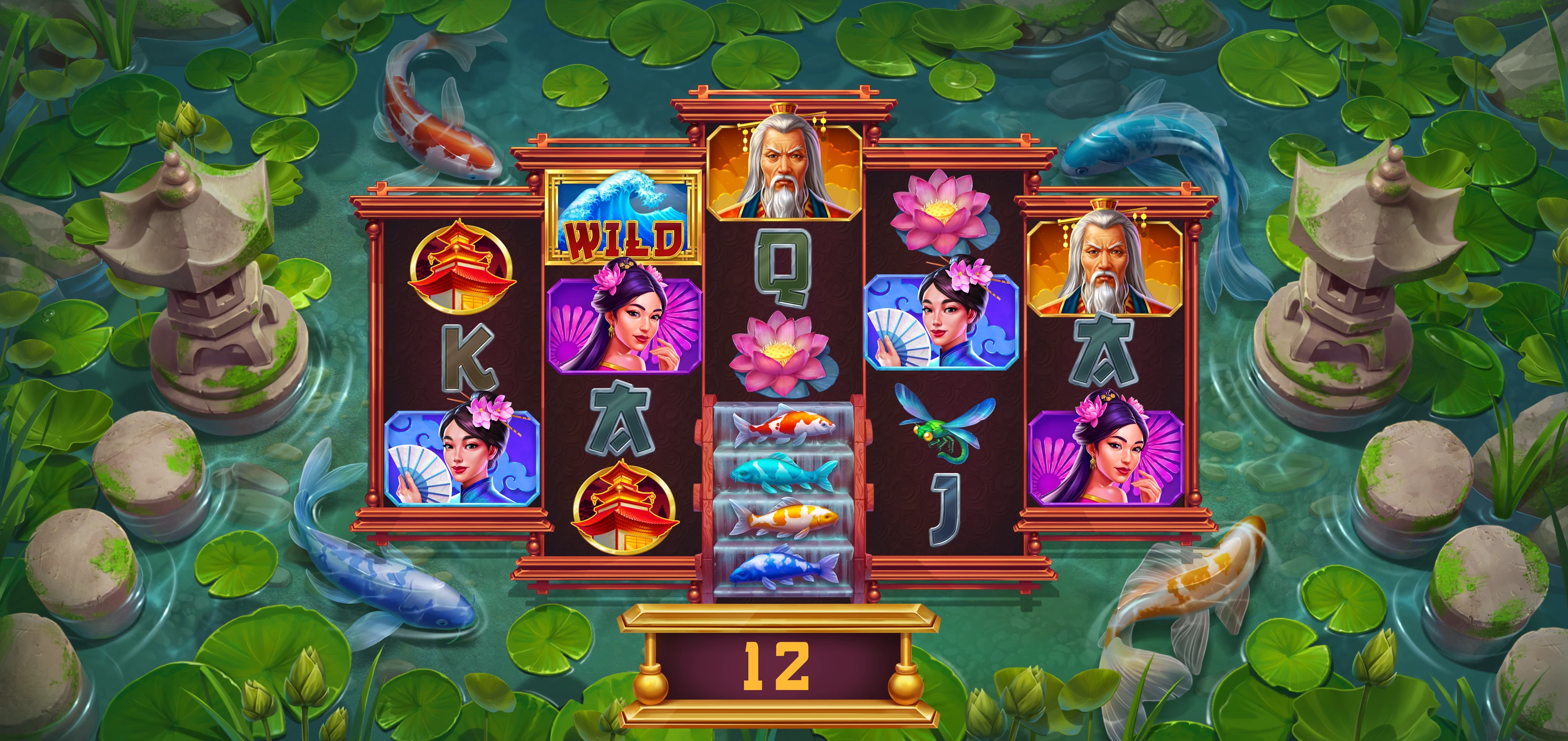
Slot symbols are ranked into tiers by payout, and the art has to make that ranking obvious without the player ever opening the paytable. Low-tier symbols stay flat and cool, high-tier symbols get volume, warm light and character. When the hierarchy is wrong, players misread the size of their own wins, and that shows up in session length.
Low-tier symbols
The royals: A, K, Q, J, 10, or card suits in some themes. They are the cheapest icons in the set and the most frequently seen, so restraint is the whole brief. They still have to carry the theme, usually through material treatment rather than shape - jade carving, engraved stone, painted wood, ice. What they must not do is compete: lower saturation, softer rim light, flatter rendering. These symbols fill most of the grid most of the time, so any noise here becomes screen noise.
High-tier symbols
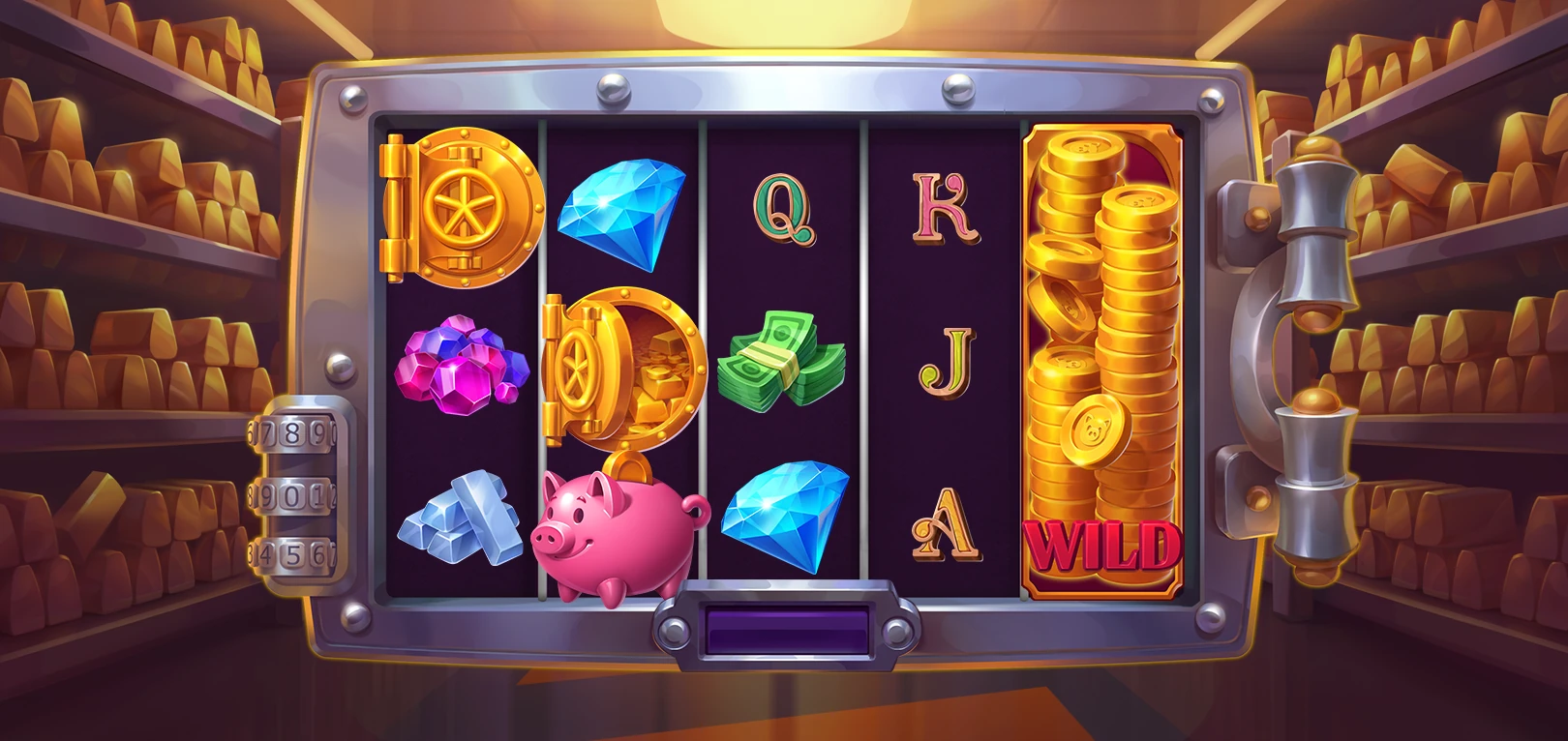
The themed objects and characters that define the SKU: the genie, the diver’s helmet, the vault door, the piggy bank, the sheriff’s badge. These get full rendering, warmer light, thicker outlines, and often a medallion or frame that lifts them off the reel strip. A useful test: hand three unfamiliar symbols to someone who has never seen the game and ask them to rank the payouts. If silhouette and warmth alone do not give the right answer, the tiers need another pass.
Special symbols: wild, scatter, bonus
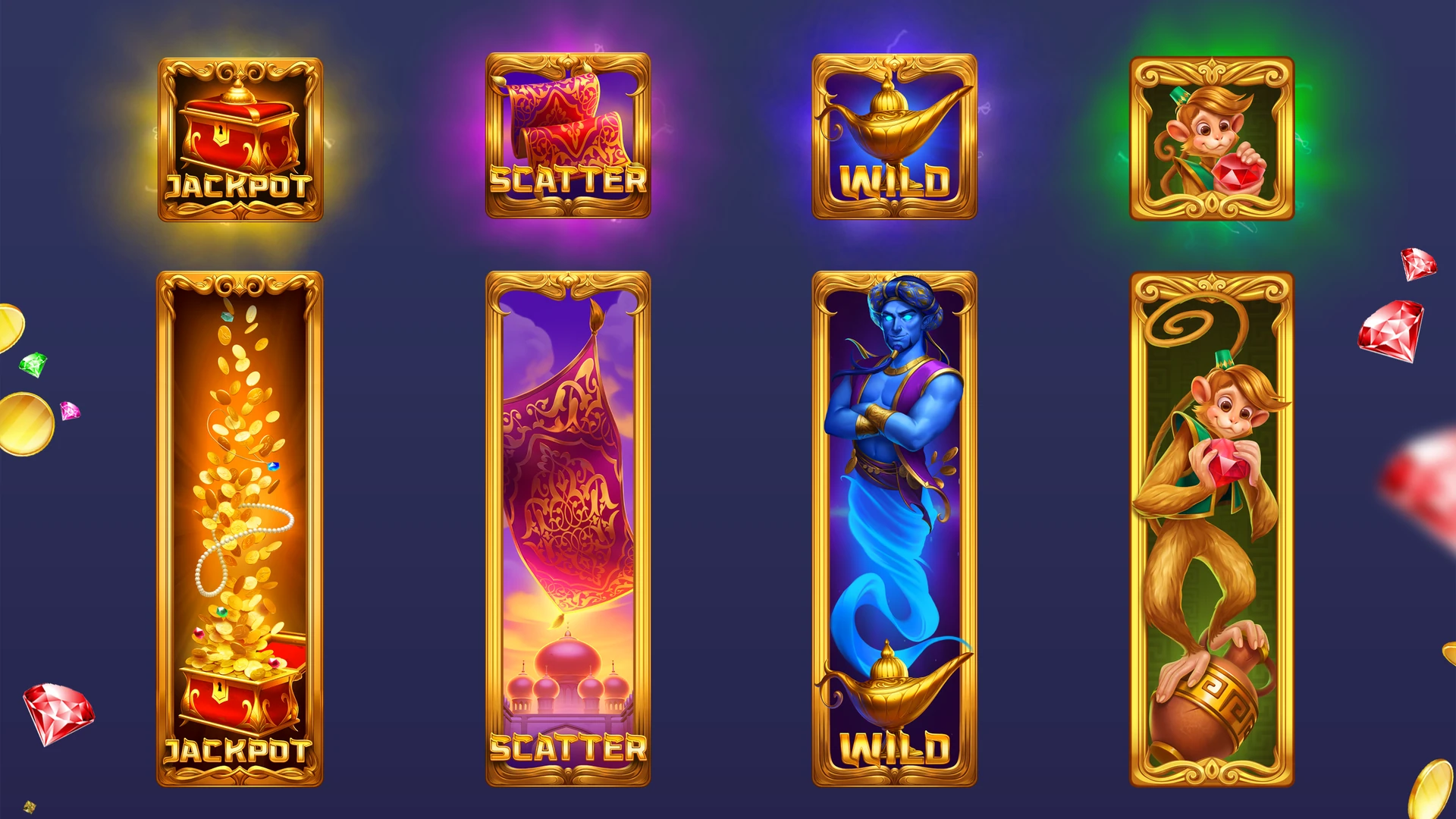
The loudest elements on the grid, and the ones with the most variants. A wild substitutes for other symbols, so it reads as help - bright frame, glow, and the word itself. A scatter fires a feature from any position, so it needs to be findable anywhere on the grid rather than just along a payline, which usually means a silhouette and colour signature nothing else in the set uses.
Specials rarely ship as a single asset. Most engines need a 1x1 cell version plus a tall stacked version covering a whole reel, sometimes a landing state and an expanded state on top of that. Budgeting one drawing per special is the most common way a slot art estimate comes in short.
The Background and the Reel Frame Are Two Different Jobs
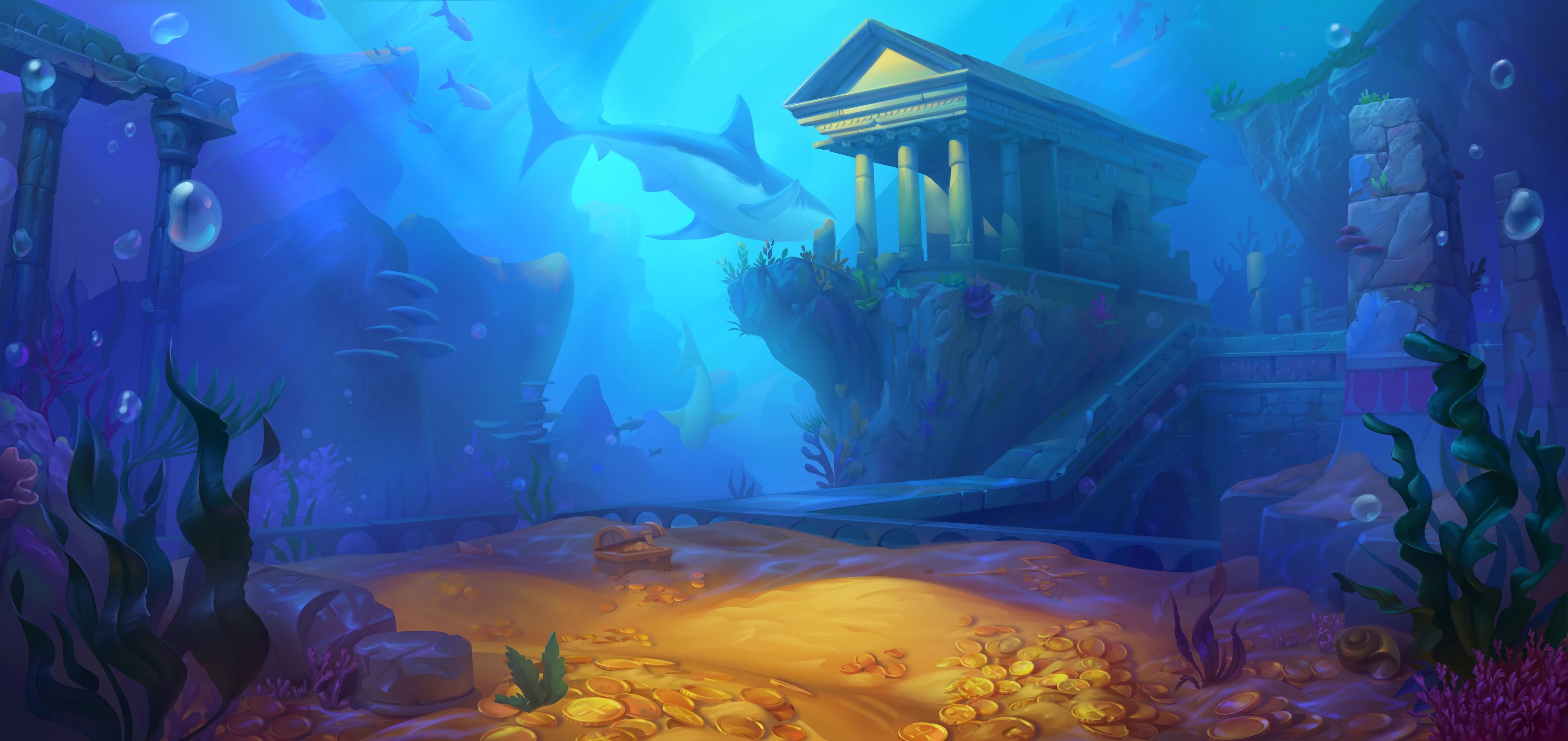
The background is the scene behind the reels; the reel frame is the themed housing around them. They are painted as separate layers because they change on different schedules - the frame is tuned for grid legibility and screen ratios, while the background carries theme, mood and any seasonal reskin the operator orders later.
The background also has to survive being mostly hidden. In landscape the grid covers the middle of the screen, so the composition works as two side panels and a strip of sky, with the interesting detail pushed outward. In portrait the same painting gets cropped hard and extended vertically. Anything important placed dead centre disappears the moment the reels load, which is the single most common mistake in first-pass slot backgrounds. The discipline we apply to video game backgrounds applies here too, just with a harder mask over the middle.
The frame carries a different constraint. It has to read as part of the theme while leaving enough dead space around each cell that symbols never touch ornament, and it has to hold up at both aspect ratios without redrawing the artwork underneath. On themed slots the frame is where most of the ornament budget goes - stone pediments, scrollwork, torii beams - because it is the one element on screen that is always visible and never animated away. Studios that build these scenes as a habit usually run them through the same game background design pipeline as any other environment work.
Slot Game UI: The Bar Nobody Notices Until It Breaks
Slot game UI is the control bar and its readouts: spin, autoplay, bet size, balance, win counter, paytable and settings. It sits along the bottom in landscape and wraps under the reels in portrait, so every element is designed twice, and every number field has to survive a seven-digit balance in a currency with long separators.
Three constraints shape it more than aesthetics. Touch targets: the spin button is the largest interactive element on screen and everything else defers to it. Localisation: button labels and currency strings stretch, so fixed-width plates break on the first non-English build. Compliance: several markets require balance, bet and a session clock to stay visible at all times, which removes the option of hiding the bar during play. Our broader breakdown of game UI design covers the general principles; slots apply them under tighter rules.
Feature Screens: Free Spins, Bonus Rounds and Big Wins
Feature screens are the celebration layer: the free-spins intro splash, the bonus-round frame, and the big-win or jackpot sequence. They are the only moment a slot is allowed to take over the whole screen, so they run hotter than the base game - stronger contrast, coin and particle bursts, and the background dimmed behind the panel so the payout number owns the eye.
Hierarchy still applies. A win five times the stake and a win five hundred times the stake should not look the same, which is why most slots ship three or four tiers of win celebration with escalating framing, effects and duration. That escalation is largely an effects problem rather than a painting problem, and it overlaps heavily with the work described in our guide to VFX for games.
Art Styles in Slot Games
Slot art clusters into three broad registers, and the choice usually comes from the target market rather than from taste. Stylised cartoon reads well on small screens and suits social casino and mobile-first titles. Semi-realistic painted art dominates the regulated online casino market. Premium rendered art, closer to 3D marketing keyart, shows up on flagship SKUs where the operator wants shelf presence in a crowded lobby.
Stylised sets are faster to produce and far easier to keep consistent across a live-ops calendar of new themes. Semi-realistic sets cost more per symbol and demand a stricter style bible, but they hold up at desktop resolution where cartoon shading starts to look thin. Most studios end up running both, because a portfolio of 40 slots rarely sits in one register.
How Slot Art Serves the Math
The math model is finished before art begins, and it dictates more of the visual design than most briefs admit. Symbol count, tier split, how often a scatter lands and how big a top win can get are all fixed numbers, and the art exists to make those numbers legible and emotionally proportionate.
Two examples of the model driving the drawing. Volatility: a high-volatility slot pays rarely and large, so its big-win sequence needs a much taller ceiling of celebration than a low-volatility title paying small wins constantly. Hit frequency: symbols that land often need to be quiet, because a player will see them thousands of times in one session. Even return to player feeds indirectly into the art brief, since a tight RTP leaves the celebration layer doing more of the retention work.
None of this means artists set the math. It means the art director reads the paytable before the mood board, and pushes back when a brief asks for six equally dramatic high-tier symbols in a model that only has room for two.
Technical Delivery: What Actually Ships
Slot art ships as engine-ready assets, not as flattened pictures. The standard package is a layered source file per asset, PNG or webp exports at the engine’s cell dimensions, an @2x set for high-density screens, and separate portrait and landscape versions of every framed element.
What the tech spec usually pins down:
- Cell size and safe area for symbols, so nothing collides with the frame.
- Portrait and landscape variants of frame, background, UI and splash screens.
- Export scales, typically 1x and 2x, sometimes 3x for premium mobile.
- Atlas packing rules and naming conventions, since a slot with 12 symbols and 4 states each becomes an unmanageable folder fast.
- Animation format: Spine skeletal rigs for character symbols and frame motion, frame-by-frame spritesheets for effects and coin bursts.
Getting this agreed in the first week is what separates a smooth integration from a month of re-exports. It is also the part of the brief clients most often leave blank, and the first thing an experienced 2D game art outsourcing partner will ask for.
What Slot Game Art Costs and How Long It Takes
A complete slot art package runs roughly $6,000 to $20,000 and takes 6 to 10 weeks, with individual themed symbols at $150 to $600 and reel backgrounds at $400 to $1,500. Style register, symbol count and animation scope drive most of the spread between a cheap set and an expensive one.
Five variables move the price of slot machine artwork more than anything else:
- Style register - stylised cartoon versus semi-realistic painted versus premium rendered.
- Symbol count and variants - 9 symbols with no stacked specials is a different job from 12 with landing and expanded states.
- Animation scope - static set only, win cycles for high-tier symbols, or a fully animated screen including frame and background motion.
- Screen coverage - reels only, or frame, background, UI, logo and four feature screens as well.
- Style match - joining an existing SKU family costs calibration time on the first assets and disappears as the set grows.
Those are 2026 market anchors, and premium animated titles sit above the range. A symbol pack ordered on its own is a two to three week job rather than a two-month one. Inside a full package, style lock lands in the first two weeks and symbol batches then run in parallel, which is why adding symbols late costs far less than changing the style late.
In-House vs Outsourcing Slot Art
An in-house slot art team makes sense when the release calendar is dense and predictable. A studio shipping a new SKU every month keeps artists busy year-round and builds institutional memory about its own engine and tech spec. Below that cadence the load arrives in bursts, and bursts are what external teams absorb well.
The practical argument for outsourcing slot art is theme range rather than headcount. A slot portfolio needs Egyptian, Irish, fruit, heist, mythology and seasonal themes in rotation, and very few in-house teams hold artists equally strong in all of them. A specialised partner brings the tech-spec discipline, the symbol-tier judgement, and a bench deep enough to run several themes in parallel without the style drifting between them.
The Takeaway
Slot machine art is engineered under harder constraints than most game art: a fixed grid, a payout hierarchy that must be legible in under a second, two aspect ratios for every asset, and a math model nobody on the art team can change. Three questions are worth holding every set to. Can a stranger rank the symbols by value without the paytable? Does the background still work with the middle of the screen covered? Does every special exist in all the states the engine will ask for?
Our team has answered those questions across Atlantis, bank heist, Wild West, Arabian Nights, Lucky Cat and fairy-tale sets, from single symbol packs to full screens with animation. If your next SKU needs that work, the portfolio shows the sets in context, and the slot and casino game art page explains how we scope and price them.