
Top 10 Character Design Studios for Games in 2026 (2D & 3D)
A character design studio gets hired for one reason: the cast has to look as if one hand drew it, at a pace the game’s roadmap can absorb. Portfolios rarely show whether a studio can do that. One striking hero illustration says little about the fortieth NPC, the third seasonal skin, or a mesh that tears when the animator bends an elbow.
We run one of these studios. Our artists have designed characters for Nexters’ Hero Wars, Owlcat Games’ Pathfinder and G5 Games’ match-3 series, and we work in the same market as the studios below, so we see their work from the vendor side. So this list is built around what each studio is actually strong at, not around who shows the most logos. It covers 2D and 3D character design companies, from AAA sculpting houses to casual mobile specialists, and ends with price anchors and a checklist for running your own selection.
Key takeaways:
- Judge a game character design studio by a full cast from one project, not by its best single piece: ten consistent characters prove more than one great hero.
- 2D and 3D character work are different hires. 2D studios sell concept and illustration; 3D studios sell sculpting, topology, textures and rig-ready meshes.
- Indicative 2026 budgets: $150-750 for a 2D hero, from $250 for a stylized game-ready 3D character, $1,000-4,000 for a realistic PBR character.
- Large vendors can scale a team for AAA rosters of hundreds of characters; for a smaller cast, check who leads the work and how fast revisions get approved.
- One paid test character, run through your own engine and rig, shows style match, revision pace and technical fit before you sign.
Quick Comparison: 10 Character Design Studios at a Glance
The table compares ten character design studios by headquarters, team size, character focus and the kind of project each one fits. Full details for every studio follow below, based on each studio’s public website and ArtStation as of October 2026.
| # | Studio | HQ | Team | Character focus | Best fit for |
|---|---|---|---|---|---|
| 1 | SunStrike Studios | Nicosia, Cyprus | 70+ | 2D and 3D, casual to realistic | Mobile and mid-core casts, one partner for 2D and 3D |
| 2 | Art Bully Productions | Raleigh, USA | 200+ | 3D characters, hair, rigging | Live-service skins and cosmetics |
| 3 | Airship | Malvern, UK | 100+ | Realistic 3D, hair and fur | Realistic AAA humans |
| 4 | Sparx | Ho Chi Minh City, Vietnam | 550+ | 3D characters, combat, animation | AAA console and PC at scale |
| 5 | Lemon Sky Studios | Kuala Lumpur, Malaysia | 150+ | 3D characters, animation, cinematics | High-fidelity characters with cinematics |
| 6 | Liquid Development | Portland, USA | Part of Keywords | 3D characters and creatures | Keywords-backed AAA production |
| 7 | Original Force | Nanjing, China | 2,900+, 1,300+ in games | 3D characters, outfits, rigging | Large AAA character rosters |
| 8 | Stepico | Lviv, Ukraine | 200+ | 2D and 3D characters | Mobile and mid-core games |
| 9 | Artking Studio | Netherlands | Freelance network | Stylized 2D characters, card art | Indie and card games |
| 10 | Whimsy Games | Kyiv, Ukraine | 75 | Stylized 2D and 3D, Spine | Casual and educational games |
How We Selected These Studios
We picked studios that sell character work as a distinct service, not only as part of general game art, and took company details and project credits from each studio’s public website and ArtStation, reviewed in October 2026. The list includes AAA production vendors and smaller teams for mobile and indie projects; minimum budgets and availability need to be confirmed with each studio. The criteria:
- A public portfolio or service page dedicated to characters, not only general game art.
- Named games and clients that can be checked on the studio’s own site.
- A clear specialization: 2D, 3D, or both, and a style range from casual to realistic.
- Enough capacity, in-house or under one art direction, to hold a style across dozens of characters and live-ops updates.
- No studios headquartered in, or owned from, Russia or Belarus.
Disclosure: SunStrike Studios is our own company. We put it first because this is our blog, and we held it to the same criteria. No studio paid to be included or to be ranked. This is an editorial shortlist, not an exhaustive market ranking: positions 2-10 are not a quality order, and the “best fit” notes are our own assessment.
1. SunStrike Studios
Location: Nicosia, Cyprus, remote-first. Character focus: 2D and 3D, from casual cartoon to realistic PBR.
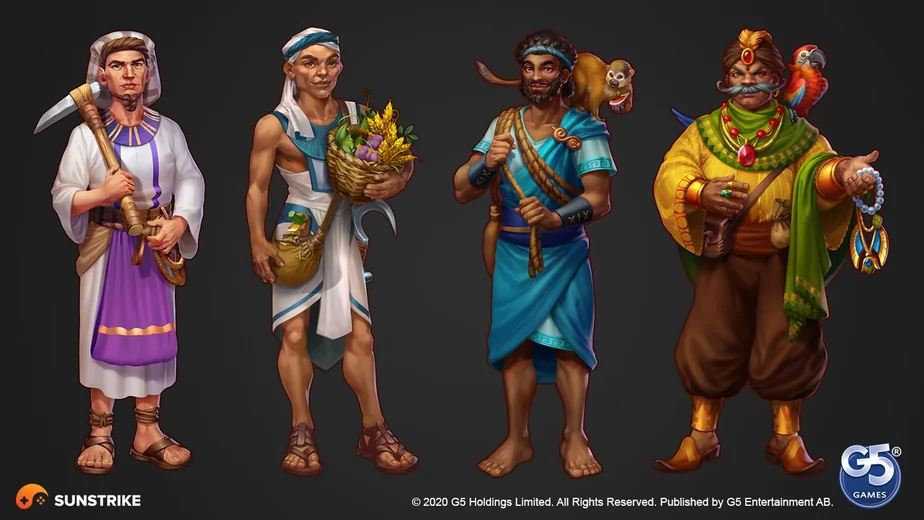
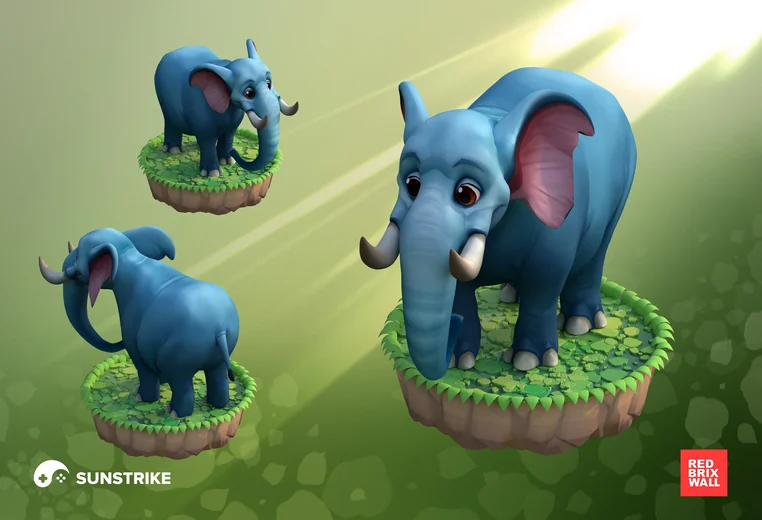
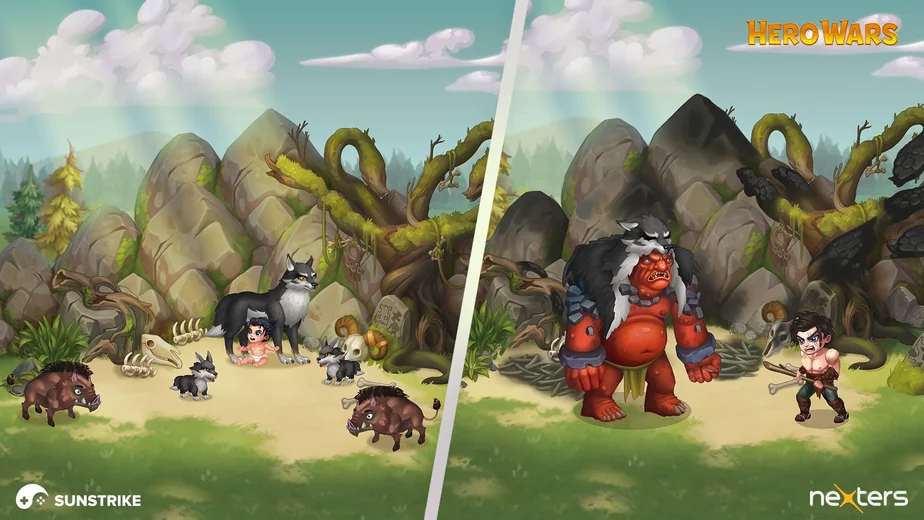
SunStrike Studios is a Cyprus-based game art studio that designs 2D and 3D characters for mobile and mid-core games, from first silhouette to rig-ready model. Founded in 2016, our team of 70+ artists and animators keeps concept, illustration and 3D modelling in one production workflow under one art lead, so the handoff between stages stays inside the studio. Character work includes the Hero Wars cast for Nexters, creature concepts for Owlcat Games’ Pathfinder: Wrath of the Righteous, townsfolk for G5 Games’ Jewels series and city-builder characters for Red Brix Wall.
Highlights:
- 2D and 3D character pipelines under one art lead: concept, illustration, sculpting, retopology and texturing.
- Styles from casual cartoon to semi-realistic illustration and realistic PBR.
- Live-ops experience: new heroes, enemies and event characters for long-running mobile RPGs.
- Fixed Price, Time & Material and Dedicated Team engagement models.
- Best fit for: mobile and mid-core studios that need a consistent cast and one partner for 2D and 3D.
2. Art Bully Productions
Location: Raleigh, North Carolina, with offices in Belgrade and Punjab. Character focus: 3D characters, creatures, hair, rigging.
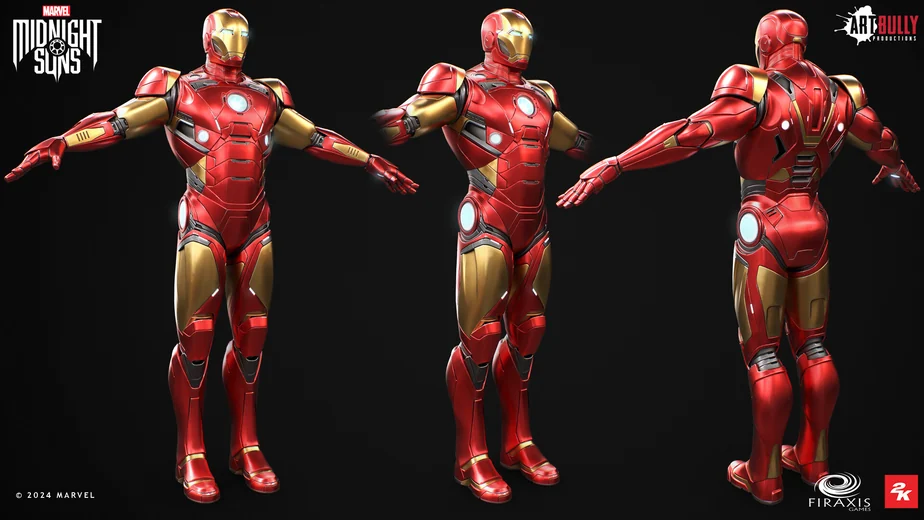
Art Bully Productions specializes in characters for live-service games: heroes, creatures, cosmetic skins, character hair, rigging and skinning. More than 200 full-time artists cover the range from photoreal to stylized, and the studio also handles keyframe animation and motion-capture cleanup. Its character credits include hero character assets for Marvel’s Midnight Suns, made with Firaxis, SMITE skins, Rogue Company characters, the Denim Outfit Pack for The Texas Chain Saw Massacre and characters for skate.
Highlights:
- Character production through to rigging and skinning, not only the model.
- Character hair as a separate discipline.
- Keyframe animation and mocap cleanup in-house.
- Best fit for: live-service teams that ship a steady stream of skins and cosmetics.
3. Airship
Location: Malvern, UK, remote-first. Character focus: realistic 3D characters, hair and fur.
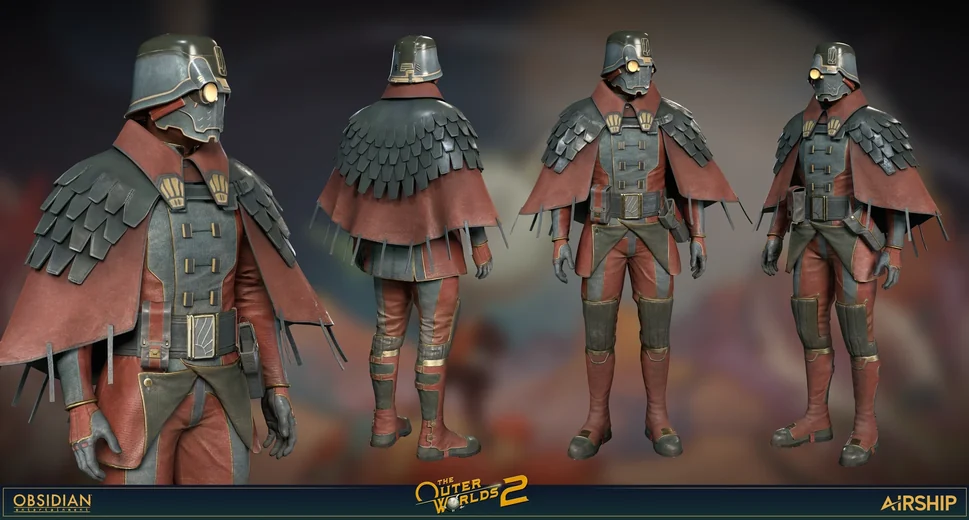
Airship is a UK studio that started in 2010 as a character art studio and still builds its reputation on realistic AAA characters, scanned or sculpted, with an in-house tool for real-time hair and fur. Its 100+ artists work remote-first around a studio in Malvern. Credits include characters for The Outer Worlds 2, PGA Tour 2K25 and Silent Hill 2 Remake, a hair library for Epic’s MetaHuman and hair work on Horizon Forbidden West. One due-diligence note: the former company, Airship Interactive, entered administration in July 2025, and the business now trades as Airship through a new company, Airmergent Limited.
Highlights:
- Realistic, scan-based and sculpted characters.
- Real-time hair and fur as a core specialty.
- Animation and cinematics alongside character art.
- Best fit for: AAA projects where realistic humans and hair are the hardest part of the cast.
4. Sparx
Location: Ho Chi Minh City, Vietnam. Character focus: 3D characters, combat design, animation.
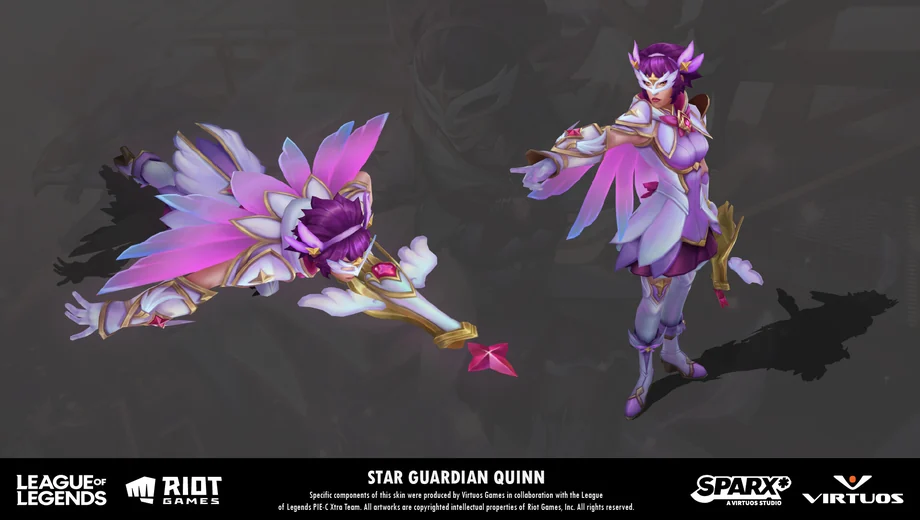
Sparx is the Vietnamese studio of Virtuos and one of the longest-running art outsourcers in Asia: founded in 1995, part of Virtuos since 2011, with about 550 people. It offers end-to-end characters and combat design, plus animation and cinematics, backed by the production capacity of the wider Virtuos group. Virtuos’s page for the studio lists credits including work on League of Legends skins, Ratchet & Clank: Rift Apart, Metal Gear Solid Delta: Snake Eater, Marvel’s Midnight Suns, 2XKO and Age of Mythology: Retold.
Highlights:
- Characters, combat design, animation and cinematics in one studio.
- Access to Virtuos group capacity when a roster grows.
- Three decades in game art production.
- Best fit for: AAA console and PC productions that need character and animation capacity at scale.
5. Lemon Sky Studios
Location: Kuala Lumpur, Malaysia. Character focus: 3D characters, character animation, cinematics.
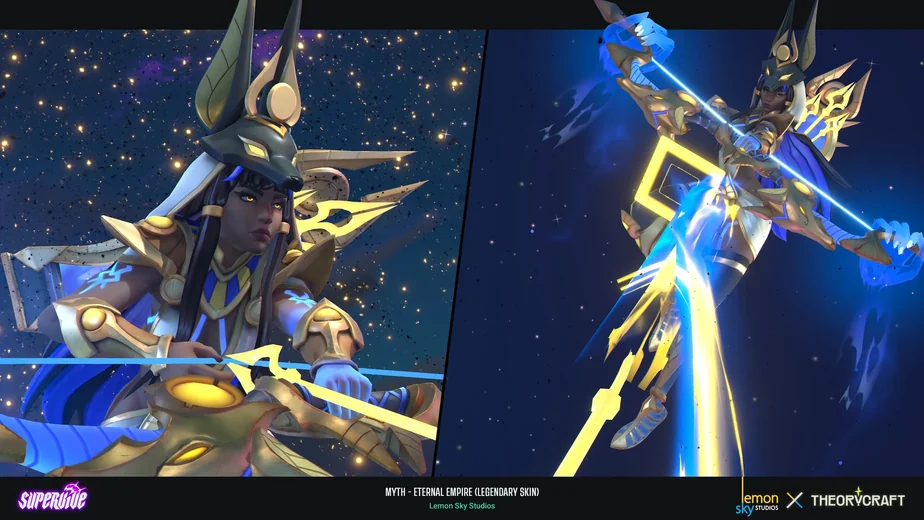
Lemon Sky Studios is one of Southeast Asia’s best-known AAA art houses, founded in 2006 in Kuala Lumpur and owned by iCandy Interactive since 2022; its site lists 150+ specialists. Character art and character animation sit alongside concept art, motion capture and cinematics, which suits productions that want characters delivered together with the scenes they appear in. The studio lists credits on Final Fantasy VII Remake, Marvel’s Spider-Man, The Last of Us and Warcraft III: Reforged, and character work on Supervive.
Highlights:
- Character art, character animation and motion capture under one roof.
- Cinematic production for trailers and in-game scenes.
- Long AAA track record with Japanese and US publishers.
- Best fit for: high-fidelity 3D characters that need animation and cinematic polish.
6. Liquid Development
Location: Portland, Oregon, USA. Character focus: 3D characters and creatures.
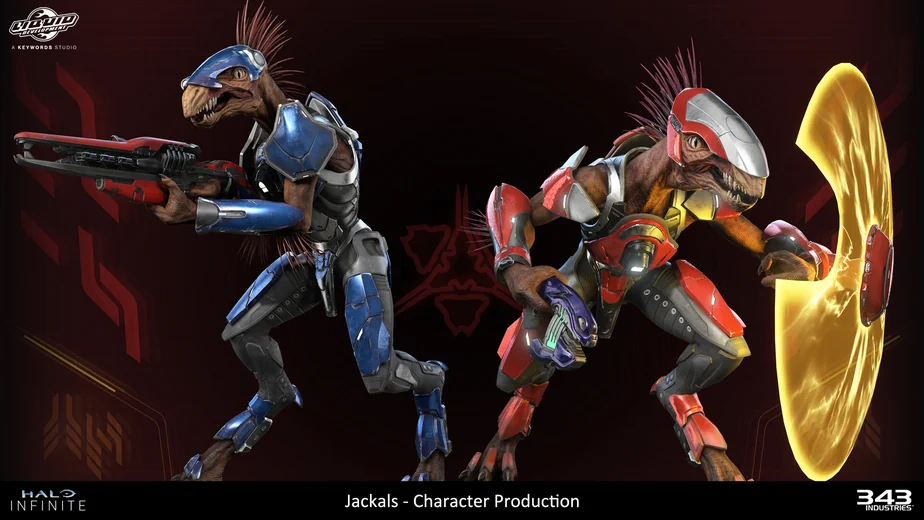
Liquid Development is a US art studio that has been part of Keywords Studios since 2015, with 3D characters and creatures listed among its core services. Being inside Keywords gives it access to the group’s wider art, animation and engineering capacity when a production scales. Credits listed for the studio include character production for Halo Infinite, plus Borderlands 3 and Back 4 Blood.
Highlights:
- 3D characters and creatures as a named service line.
- Backed by Keywords Studios’ global art and engineering network.
- North American time zone for US publishers.
- Best fit for: AAA teams that want a US-based, Keywords-backed vendor for 3D characters.
7. Original Force
Location: Nanjing, China. Character focus: 3D characters, outfits, rigging and animation.
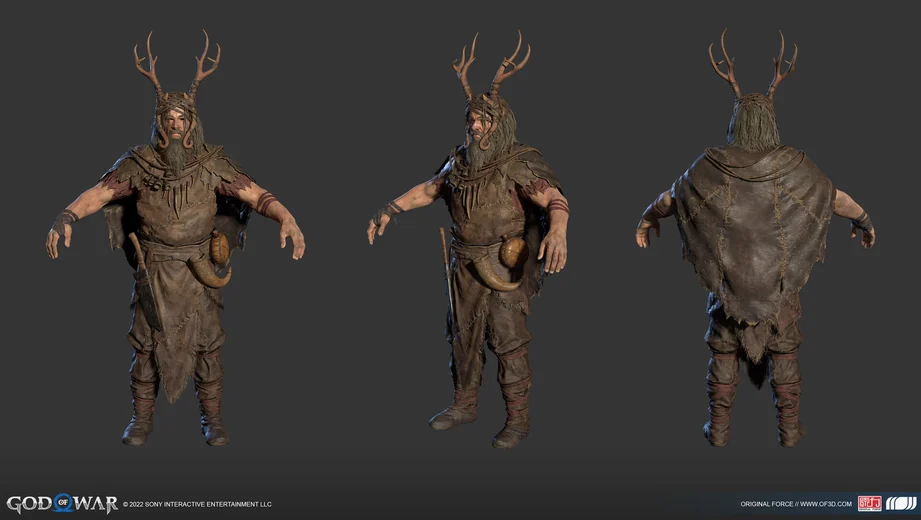
Original Force is one of the largest 3D art houses in Asia: founded in 1999 in Nanjing, it employs more than 2,900 people, over 1,300 of them in its game division. It runs the full 3D character pipeline - concept, modelling, texturing, rigging and animation - plus character outfits and digital humans. Its own portfolio credits it with characters for God of War Ragnarök, character outfits for Ghost of Yōtei and character production for Sunderfolk; the studio also lists Baldur’s Gate 3 and Black Myth: Wukong among its projects.
Highlights:
- Full 3D character pipeline from concept to animation.
- Outfits and costume variants as a dedicated service.
- A game division of more than 1,300 people for large rosters.
- Best fit for: AAA productions that need a large, steady 3D character team.
8. Stepico
Location: Lviv, Ukraine, with offices in New York, Limassol and Sydney. Character focus: 2D and 3D characters.
Stepico is a Ukrainian game developer founded in 2014 that also sells 2D and 3D character design as a separate service. Its site lists 200+ team members and clients including NBC Universal, Gameloft, Outplay and Immutable; in 2022 it bought the art studio Inkration. Its ArtStation shows full character sets for MMA Manager, Olivia’s Mysteries and the sci-fi game Discovery, from stylized 2D heroes to game-ready 3D models.
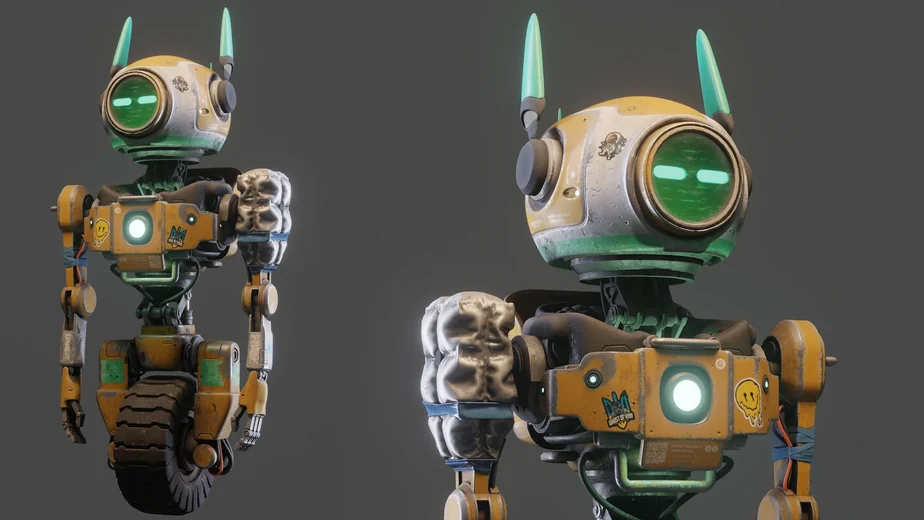
Highlights:
- 2D and 3D character design inside a full-cycle game developer.
- Stylized, cartoon and realistic styles for mobile and mid-core games.
- Art lead oversight when a roster is extended over time.
- Best fit for: mobile and mid-core teams that may also need development help.
9. Artking Studio
Location: the Netherlands. Character focus: stylized 2D characters, card and key art.
Artking Studio is a Dutch art outsourcing studio founded in 2011 by comic artist Romano Molenaar and Niel Vredeveldt. It designs stylized 2D characters, monsters and model sheets, plus card illustrations and key art. Unlike the studios above, Artking works as an art-directed network of freelance artists, with the founders supervising each project. Before ordering, ask who will work on your characters and how deliveries are reviewed. Clients include Wargaming, for World of Tanks key art, and Nixxes Software.
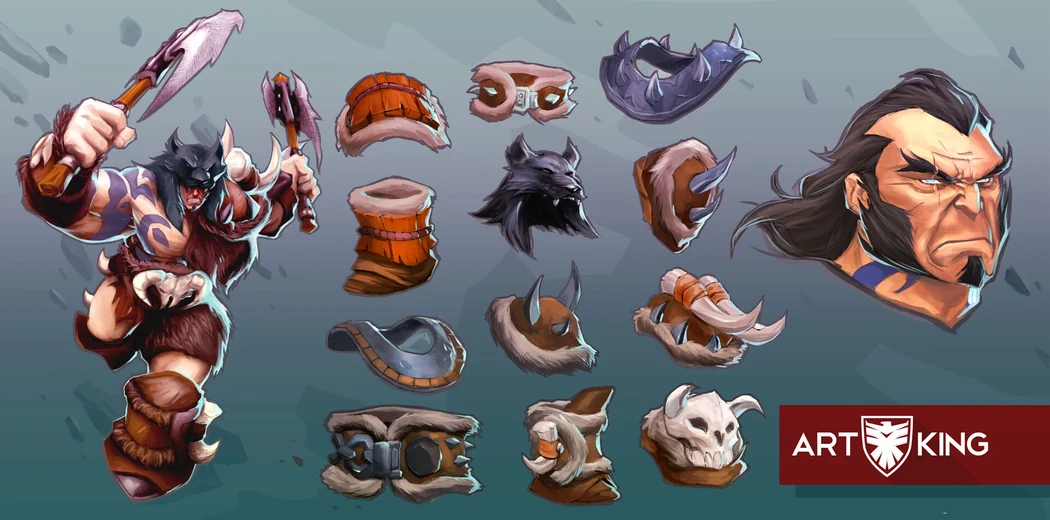
Highlights:
- Stylized 2D characters, monsters and model sheets.
- Card illustrations and key art for live games.
- Senior art direction from founders with comics and games backgrounds.
- Best fit for: indie and card-game teams that need a distinctive illustrated style.
10. Whimsy Games
Location: Kyiv, Ukraine. Character focus: stylized 2D and 3D characters, Spine animation.
Whimsy Games is a Kyiv-based studio of 75 people, founded in 2018, that designs 2D and 3D characters in-house, with concept art and, for 2D characters, Spine rigging and animation. Its strength is stylized work: mascots, collectible character sets and animated 2D heroes for mobile, indie and educational games. Its character portfolio includes sets for Undeads, NightFall, Izanagi and a children’s spelling game.
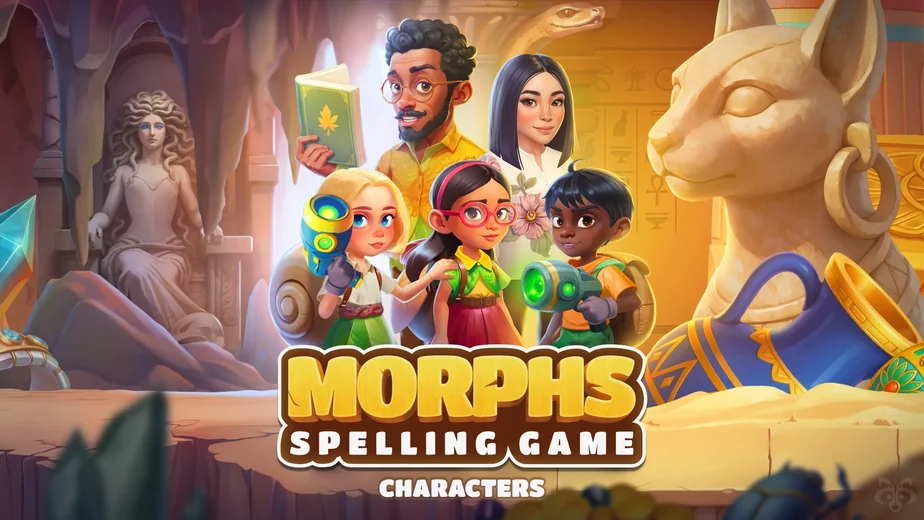
Highlights:
- Stylized 2D and 3D characters; Spine rigging and animation for 2D.
- Concept-to-animation in one small team.
- Strong in collectible sets with many variants.
- Best fit for: casual, indie and educational projects that need animated stylized characters from one team.
What a Character Design Studio Delivers
A character design studio turns a written brief into characters your production can use: concept sheets, final 2D art or 3D models, and the technical files your engine and animators need. The useful output is never one picture. It is a set of documents that lets another artist, months later, draw or model the same character without guessing.
In practice the package grows in layers:
- Exploration: silhouettes, costume and colour variants, usually three to six options per character before one is approved.
- Character sheet: a front, side and back turnaround, an expression set and palette callouts - what animators call a model sheet.
- 2D finals: in-game sprites, portraits, splash art, or layered files cut for Spine animation.
- 3D production: a high-poly sculpt, retopology to your polygon budget, UVs, PBR or hand-painted textures and LODs.
- Rig-ready delivery: clean edge loops at the joints and correct scale and pivots, so the mesh deforms when it moves. Some studios also rig and animate; most quote that separately.
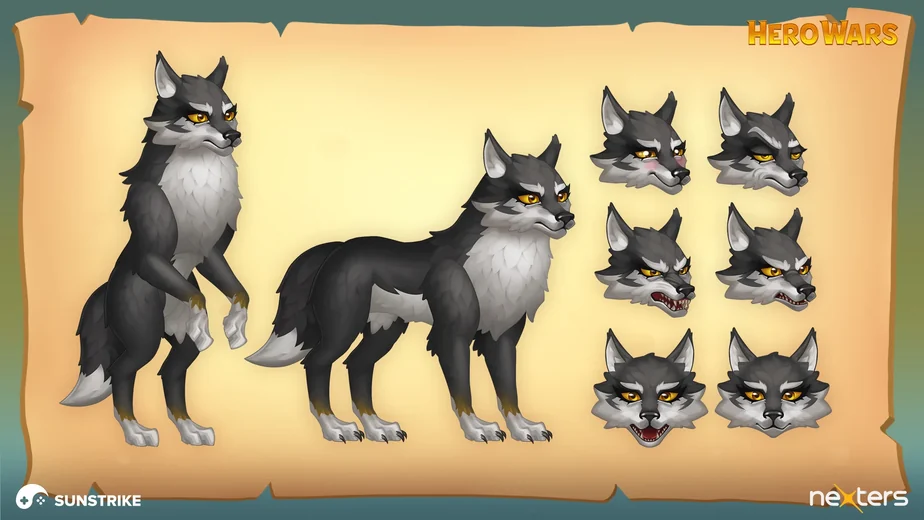
“Character design studio”, “character design agency” and “character design company” are used interchangeably in this market. The label does not tell you how a vendor staffs a project. Ask who leads the work, who reviews each delivery, whether subcontractors are involved and how the team keeps art direction consistent between batches.
When to Outsource Character Design
Outsource character design when the cast grows faster than your team can draw it, when the game needs a style your artists do not work in, or when the job needs 3D skills your studio lacks, such as sculpting, hair or rigging. If the main characters still change every week, start with a discovery phase rather than full production.
In practice, most teams hand off one of three things:
- Volume: a locked style and a long list of NPCs, enemies or skins that in-house artists cannot finish on schedule.
- A new style: a project that needs, say, painterly 2D or realistic 3D when the team has only shipped casual art.
- A missing discipline: sculpting, retopology, real-time hair or rigging, which small teams rarely staff full-time.
If the visual direction is still open, commission it as a separate discovery phase with clear review milestones. Once the hero and the style guide are approved, scope the rest of the cast as production work.
2D vs 3D Character Design Studios: Which One You Need
Hire a 2D character design studio when your characters live as illustrations, sprites, portraits or Spine rigs. Hire a 3D character design studio or agency when they have to be modelled, textured, rigged and lit inside the engine. The two disciplines share concept work and almost nothing after it, so many studios that are excellent at one are average at the other.
A 2D studio’s core skill is drawing: anatomy, shape language, expression and painting at the size the player will see. A 3D studio’s core skill is construction: sculpting form, laying topology that deforms well, baking and texturing to a polygon and memory budget. Even a 2D game that uses Spine needs someone who thinks about joints, and a 3D character needs an agreed design reference - concept art, a sculpt, a scan or an existing asset - before production starts.
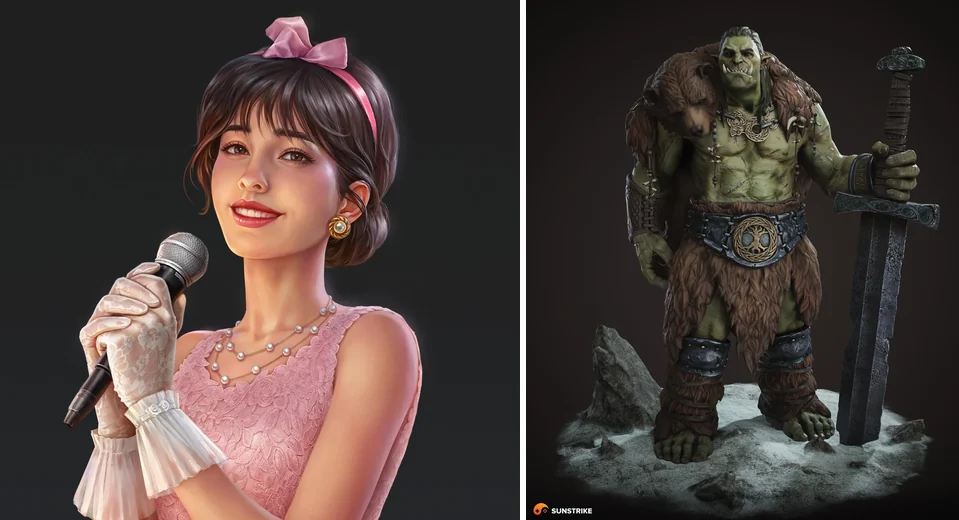
Most projects end up needing both, because a 3D character is only as good as its approved concept. When one studio covers both stages, the 3D artist can ask the concept artist what a strap is for instead of guessing. When two vendors split the work, budget an extra review round for the handoff. That is the main reason we keep 2D character design services and 3D character modeling under one roof.
How Much Character Design Costs at a Studio
A character design studio typically charges $150-750 for a 2D hero character from concept to final art, from $250 for a stylized game-ready 3D character, and $1,000-4,000 for a realistic PBR character. Hourly rates run roughly $15-45 depending on seniority and region, but most character work is quoted per character once the style is locked.
Treat these figures as indicative budgets for the scopes in the table, not as quotes from the studios in this list, and ask for an estimate against your brief before comparing vendors. In our experience, rates have come down as AI tools took over the cheapest hours in a character - exploration sketches, reference boards, first texture passes - while design decisions and final polish stay with artists. According to GDC’s 2026 State of the Game Industry survey, 36% of game industry professionals already use generative AI tools in their work.
| Deliverable | 2026 range per character | What moves the price |
|---|---|---|
| 2D hero, concept to final art | $150-750 | Revision rounds, number of poses and expressions |
| Semi-realistic 2D character | $200-600 | Rendering depth, costume detail |
| Stylized game-ready 3D character | from $250 | Polygon budget, outfits and accessories, hand-painted vs PBR |
| Realistic PBR 3D character | $1,000-4,000 | High-poly sculpt, skin and cloth detail, LODs |
| Rigging and animation | quoted separately | Skeleton type, facial rig, number of clips |
Two things move the budget more than the table does. First, the first character in a new style costs the most, because it carries the style exploration; the tenth character in a locked style is far cheaper. Second, extra views and expressions are where scope quietly grows. Agree up front how many poses, expressions and outfits each character includes, and price skins as their own line.
How to Choose a Character Design Company
Choose a character design company by testing it on your own cast and pipeline, not by its showreel. A test can cover one production stage, such as a concept or a model built from an approved concept, rather than a complete character. Six checks, in this order, separate studios that can produce one good piece from studios that can ship a coherent roster:
- Write the cast brief before you shortlist. Count heroes, NPCs and enemies, list the views and expressions each needs, and note the size each character appears at on screen.
- Judge the roster, not the hero. Ask for a full cast from one project. Consistency across twenty characters is harder than polish on one.
- Find out who draws. In-house artists, a freelance network or a mix? Ask how the vendor keeps art direction and the project team consistent across deliveries.
- Run one paid test character. Put it through your engine and, for 3D, your rig, and check it at actual on-screen size. Our guide to concept art outsourcing covers how to structure a test that tells you something.
- Fix IP, source files and revisions in the contract. Layered PSDs, ZBrush and Blender or Maya sources, and the number of included revision rounds per stage.
- Plan for live ops. New heroes, skins and seasonal variants should come from the same art lead and style guide. If the style is still open, settle it first: our breakdown of game art styles shows what each style costs to keep consistent.
If you need a broader vendor list that also covers environments, UI and full art production, see our ranking of game art outsourcing studios.
The Takeaway
The best character design studio for your game is the one whose strongest cast already looks like the one you need, and whose test character survives your pipeline. Size matters less than fit: a 3,000-person vendor and a 30-person boutique can both be the right answer for different rosters.
Start with the brief, shortlist three studios from the table above, and pay all three for the same test, budgeting for three separate tests plus your team’s review time. You will learn more from three versions of one character than from three sales calls.
If you are building a cast now, our portfolio shows complete character sets from Hero Wars, Pathfinder and G5’s match-3 games. Send us your character brief, style references, target platform and delivery requirements, and our 2D character design or 3D character modeling team will scope a paid test.